

Brighten Your Home: A Guide to Choosing the Best Lights for Outside the House
Making your house look good after dark is just as important as how it looks during the day. Good house exterior lights can really change how your place feels, making it safer and more welcoming. It’s not just about being able to see; it’s about creating an atmosphere. Getting the right lighting can be a bit tricky, though, with so many options out there. This guide is here to help you figure out the best ways to light up your property.
Key Takeaways
- Pick the right kind of light fixtures for your garden and front door, like pathway lights or wall sconces.
- Think about safety and security first, using motion sensor lights and putting them in smart places.
- Create a nice mood with pathway lighting to guide people and brighten up your garden.
- Show off special parts of your home using accent lighting techniques.
- Keep your outdoor lights working well by cleaning them regularly and checking for damage.
Wall Sconces And Lanterns
When you're thinking about lighting up the outside of your house, wall sconces and lanterns are often the first things that come to mind, especially for your entryway. They're not just about making your front door visible; they really set the tone for your home as guests arrive. Sconces usually mount directly onto the wall, often flanking a doorway or garage, while lanterns can be hung or wall-mounted, bringing a bit of classic charm.
Choosing the right size is key to making them look just right. Too small, and they'll get lost; too big, and they can overwhelm the space. A good rule of thumb is to aim for a fixture that's about a quarter to a third of the width of your door. For sconces, consider their height too – roughly a quarter to a third of the door's height works well.
Here are a few things to think about when picking out wall sconces and lanterns:
- Style: Do you want something traditional, like a rustic lantern, or a more modern design with clean lines? Your choice should complement your home's architecture.
- Location: Will the light be exposed to the elements? If it's under a covered porch, a 'damp rated' fixture might be fine. If it's going to get rained on directly, you'll need a 'wet rated' one.
- Light Output: Think about the kind of light you need. Do you want a soft glow to welcome people, or something brighter for better visibility and security?
- Bulb Type: While many fixtures come with integrated LEDs, you might be replacing an old one. Consider energy-efficient LED bulbs or even smart bulbs for added convenience.
Don't forget to check the fixture's durability, especially if you're opting for LED solutions. It's worth a quick look to make sure it'll stand up to the weather over time.
Pathway Lights
Pathway lights are the unsung heroes of your outdoor setup. These are usually smaller lights, often with a stake you push into the ground, designed to line your garden paths, walkways, or even the edges of your driveway. Their main job? To make sure you, your family, and any guests can see where they're going after dark and avoid any nasty trips.
They don't need to be blindingly bright, but they should cast enough light to clearly define the path ahead. You'll find them in all sorts of styles, from sleek, modern designs that are barely noticeable during the day to more traditional, decorative ones that add a bit of charm to your garden. When choosing bulbs, a warmer colour temperature, somewhere around 2700K to 3000K, usually feels more inviting and less harsh.
Here’s a quick rundown of what to consider:
- Purpose: Primarily for safety and guidance, ensuring clear visibility of the path.
- Brightness: Sufficient to see the path, but not so bright it causes glare or feels intrusive.
- Style: Choose fixtures that complement your home's exterior and garden aesthetic.
- Bulb Type: LEDs are a great choice for efficiency and longevity. Consider warm white bulbs for a welcoming glow.
When selecting pathway lights, think about how they'll look and function throughout the year. Some might be more visible in winter when the garden is bare, so their design matters even when they're not on. Also, consider how easy they are to install and maintain – you don't want a complicated setup that requires a professional for every little thing.
These lights are fantastic for creating a safe and welcoming journey from your car to your front door, or for simply making your garden accessible and enjoyable in the evening.
Landscape Lighting
Landscape lighting is all about making your garden and outdoor spaces look good and be functional after dark. It's not just about sticking a few lights in the ground; it's about creating a whole atmosphere. You can use it to highlight specific features, like a particularly nice tree or a garden wall, or just to make your pathways safer to walk on. The key is to think about what you want the lights to do.
When you're planning your landscape lighting, consider a layered approach. This means using different types of lights for different purposes. You might have:
- Ambient Lighting: This provides general illumination, like soft light from wall sconces near your patio or a few well-placed garden lights. It sets a mood.
- Task Lighting: This is for specific activities, such as lighting up a barbecue area or a seating spot where you might read.
- Accent Lighting: This is used to draw attention to particular features, like uplighting a striking tree or washing light up a textured garden wall.
Most landscape lighting systems run on low voltage, which is safer and uses less electricity. You'll need a transformer to step down the household voltage. It's often best to get a professional to handle the wiring, especially if it involves digging trenches, to make sure it's done safely and to code. You can find a wide range of LED bulbs for outdoor use that are energy-efficient and long-lasting.
When choosing fixtures, always make sure they are rated for outdoor use. There are 'wet rated' fixtures for areas exposed to rain and 'damp rated' for covered spots like patios. This ensures they can withstand the elements and last for years to come.
Motion Sensor Lights
Motion sensor lights are a bit of a no-brainer for a lot of people, and honestly, I get why. They're brilliant for security, making sure any unexpected visitors get a bit of a surprise. The main idea is that they only switch on when they detect movement, which is great for saving energy when you don't actually need the light on. Think about your driveway, the back garden, or even just the front porch – anywhere you want a bit of extra peace of mind.
When you're picking them out, have a think about the range and how sensitive you want the sensor to be. You don't want them flashing on every time a cat strolls by, but you definitely want them to pick up on anything more significant. Some of the fancier ones let you adjust these settings, which is handy. They're often LED bulbs these days, which is a good thing because they last for ages and don't guzzle electricity like the old incandescent ones used to. You can get them in all sorts of styles, from simple, functional security lights to more decorative lanterns that still have the motion-sensing tech built-in.
Here's a quick rundown of what to consider:
- Detection Range: How far out the sensor can 'see'.
- Sensitivity Adjustment: Can you fine-tune it to avoid false alarms?
- Light Type: Most are LED now, offering good brightness and efficiency.
- Power Source: Mains powered or solar options are available.
- Durability: Look for weather-resistant models for outdoor use.
These lights are fantastic for deterring unwanted guests. The sudden burst of light can be enough to make someone think twice about what they're doing. Plus, it means you're not leaving lights on all night unnecessarily, which is good for your electricity bill and the environment.
LED Bulbs
When you're looking at outdoor lighting, LED bulbs are pretty much the standard these days, and for good reason. They're a massive step up from the old incandescent bulbs we used to have. For starters, they sip electricity – seriously, they use way less power, which is brilliant for keeping those energy bills down. Plus, they last for ages. We're talking tens of thousands of hours, so you won't be up a ladder changing bulbs every other month.
Choosing the right LED bulb isn't just about picking one off the shelf, though. You'll want to think about the colour temperature. This is measured in Kelvin (K). For a nice, warm, inviting glow around your porch or patio, something in the 2700K to 3000K range is usually spot on. If you need something brighter and more functional, perhaps for lighting up the driveway or a security area, you might want to look at cooler temperatures, maybe between 4000K and 5000K.
Here's a quick look at how they stack up against older types:
- LED Bulbs: Last 25,000+ hours, use very little energy. The best all-rounder for longevity and savings.
- Smart LED Bulbs: Same great lifespan and efficiency as regular LEDs, but with added app control for scheduling and remote adjustments.
- Halogen Bulbs: Last around 2,000 hours, use medium energy. Better than old incandescents but still not as efficient as LEDs.
- Incandescent Bulbs: Only last about 1,000 hours and use a lot of energy. These are being phased out.
One thing to remember is that even though LEDs last a long time, they don't last forever. If a light stops working, the bulb is often the first thing to check. Make sure you get the right replacement for your fixture – check the socket type and the maximum wattage it can take. If you've got smart bulbs, you might need to re-pair them after a power cut or if you swap them out.
LEDs also come in a huge range of brightness levels and even colours, so you can really tailor the look and feel of your outdoor space. Whether you want a subtle ambient light or a bright security floodlight, there's an LED for the job.
Smart Bulbs
Smart bulbs are a bit of a game-changer for outdoor lighting. Basically, they're LED bulbs with built-in Wi-Fi or Bluetooth, letting you control them from your phone or tablet. This means you can turn lights on or off, dim them, or even change their colour without leaving your sofa.
Think about it: you're settling down for the evening and realise you left the porch light on. Instead of getting up, you just tap your phone. Or maybe you want to create a specific mood for a garden party – you can adjust the brightness and colour of your patio lights with a few clicks. They're also brilliant for setting schedules. You can have your driveway lights come on automatically at dusk and switch off at dawn, or even have them flicker on and off while you're away on holiday to make it look like someone's home.
Here's a quick look at what makes them stand out:
- Remote Control: Adjust lights from anywhere using a smartphone app.
- Scheduling: Set lights to turn on/off automatically at specific times.
- Dimming & Colour Change: Fine-tune brightness and choose from millions of colours (on compatible models) to set the perfect atmosphere.
- Voice Control: Many smart bulbs integrate with voice assistants like Alexa or Google Assistant.
While they might cost a bit more upfront than standard LED bulbs, the convenience and potential energy savings from being able to precisely control when lights are on and at what brightness can make them a worthwhile investment. Plus, they're usually just as energy-efficient as regular LEDs, so you're not sacrificing that benefit.
When you're setting up smart bulbs, especially for outdoor use, make sure they're rated for exterior conditions. You don't want water getting into the electronics and causing a short circuit. Also, check your Wi-Fi signal strength in the areas where you plan to install them; a weak signal can lead to unreliable performance.
Accent Lighting
Accent lighting is all about drawing attention to specific features around your home's exterior. Think of it as the jewellery for your house and garden. It's not about lighting up a whole area, but rather highlighting something you want people to notice – maybe a particularly nice tree, a textured garden wall, or some interesting architectural detail on your home.
The goal is to create visual interest and add depth to your outdoor space.
Here are a few ideas for using accent lighting:
- Uplighting: Place lights at the base of a tree or shrub and point them upwards. This creates a dramatic effect, especially at night.
- Washing: Position lights low on the ground to shine upwards against a wall. This works well for textured surfaces like brick or stone, bringing out their character.
- Spotlighting: Use focused beams to highlight specific objects, like a garden statue or a unique plant.
- Downlighting: Mount lights higher up, perhaps on a tree branch or under an overhang, and direct the light downwards onto a feature. This can mimic natural moonlight.
When choosing accent lights, consider the beam angle. A narrow beam is good for spotlighting a single object, while a wider beam is better for washing a wall. You'll also want to think about the colour temperature of the bulbs. Warmer tones (around 2200K-2700K) tend to create a more inviting and subtle effect, which is often ideal for accentuating features without being harsh.
Remember, accent lighting works best when layered with other types of outdoor lighting, like ambient or pathway lights. It's the finishing touch that makes your exterior truly shine.
Ambient Lighting
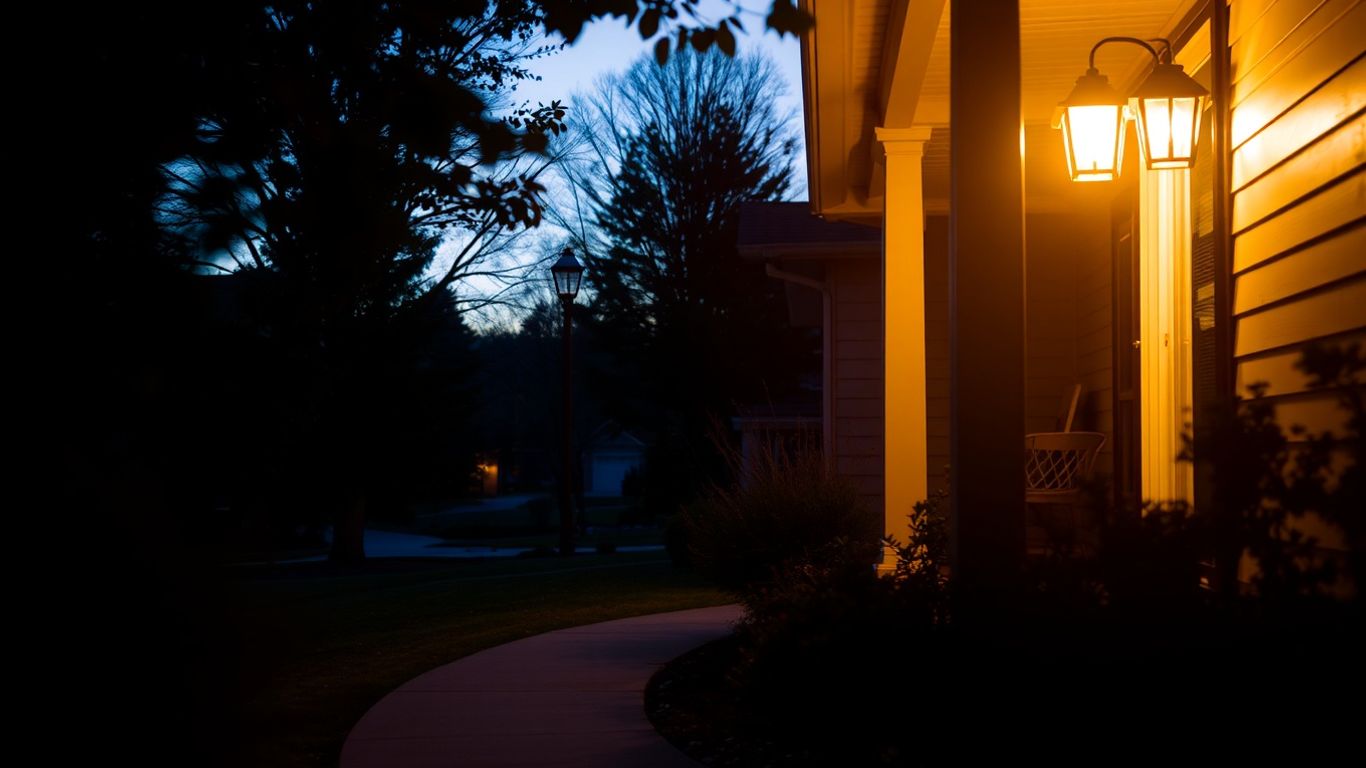
Ambient lighting is all about setting a mood, creating that general, welcoming glow that makes your outdoor space feel inviting. It’s the soft background light that makes your garden or patio feel cosy after the sun goes down. Think of it as the overall wash of light that ties everything together, rather than focusing on one specific spot.
This type of lighting is less about seeing every little detail and more about creating a pleasant atmosphere. It’s the kind of light you want when you’re just relaxing with a cuppa or having a quiet chat with friends.
When choosing ambient lighting, the colour temperature is key. You'll generally want something warmer, often in the 2200K to 2700K range. This gives off a soft, yellowish hue, similar to candlelight, which is much more relaxing than a stark, bright white.
Here are a few ways to achieve ambient lighting:
- Wall Sconces: Placed near doorways or along pathways, these can provide a gentle, diffused light.
- Lanterns: Whether hanging or standing, lanterns often have a decorative element and cast a soft, patterned light.
- Garden Lights: Low-level lights dotted amongst flowerbeds or along borders can create a lovely, subtle glow.
- String Lights: Draped across a patio or along a fence, these add a festive and warm feel.
It’s worth noting that ambient lighting often works best when layered with other types of lighting, like pathway lights for safety or accent lights to highlight specific features. You don't want your whole garden lit up like a football pitch, but you also don't want it pitch black.
The goal with ambient lighting is to make your outdoor areas feel comfortable and appealing, encouraging you to spend more time outside, even after dark. It’s about creating a gentle, overall illumination that feels natural and relaxing.
Task Lighting
Task lighting is all about getting a job done safely and efficiently outdoors. Think about those times you're out on the patio late, trying to finish up some gardening, or maybe you're grilling and need to see what you're doing. That's where task lighting comes in. It's focused light, designed to illuminate a specific area where you need to perform an activity.
Unlike ambient lighting, which just gives a general glow, or accent lighting, which highlights features, task lighting is purely functional. It's the difference between just seeing your garden and being able to actually work in it after dark. You might need it for a workbench on the patio, a BBQ area, or even just to make sure you can see the steps clearly when you're heading to the shed.
When choosing task lighting, consider what you'll be doing. For areas like a BBQ or an outdoor kitchen, you'll want something bright enough to see clearly, perhaps a directional spotlight or a sturdy wall-mounted fixture. If it's for a workbench, you might want something adjustable.
Here are a few ideas for where task lighting can be really useful:
- BBQ Areas: Make sure you can flip those burgers without guessing.
- Outdoor Workbenches: Perfect for DIY projects or potting plants.
- Steps and Entrances: While also serving as safety lighting, clear illumination here is key for tasks like carrying groceries.
- Deck or Patio Seating Areas: If you enjoy reading or playing games outside in the evening, focused light is a must.
The brightness and colour temperature are important here. You don't want a dim, yellowish light that makes everything look murky. For most task lighting, a neutral to cool white light (around 3000K to 4000K) works well to provide good visibility. LED bulbs are a great choice because they're energy-efficient and long-lasting, meaning you won't be constantly replacing them. Plus, many modern task lights are designed to be weather-resistant, so they can handle whatever the UK weather throws at them.
Floodlights
Floodlights are your go-to for serious illumination. Think of them as the workhorses of outdoor lighting, designed to cast a wide, powerful beam. They're brilliant for lighting up large areas like driveways, back gardens, or even the side of your house. Their primary function is to make spaces feel safer and more visible after dark.
When you're choosing floodlights, you'll want to consider a few things. The beam angle is important – a wider angle covers more ground but might be less intense, while a narrower angle focuses the light more intensely on a specific spot. Lumens are also key; this measures the brightness, so more lumens mean a brighter light. For general security or illuminating a whole garden, you'll want a higher lumen count.
Here's a quick look at bulb types commonly used in floodlights:
- LED Bulbs: These are the champions of the floodlight world. They're incredibly energy-efficient, last for ages (often 25,000 hours or more), and come in various colour temperatures. You'll find plenty of great LED bulbs UK options available.
- Halogen Bulbs: While they offer good brightness, they consume significantly more energy than LEDs and don't last nearly as long. They're becoming less common for new installations.
- Smart Bulbs: Often LED-based, these give you control over brightness and timing via an app, which can be handy for managing large areas.
Placement is also something to think about. You don't want floodlights blinding you or your neighbours when you're inside. Often, mounting them higher up on the house or on a pole can help direct the light downwards where it's needed most. They're also a popular choice for motion-sensor setups, adding an extra layer of security.
Floodlights are powerful tools for both security and usability. They can deter unwanted visitors and make navigating dark outdoor spaces much easier. Just be mindful of where you point them to avoid light pollution or annoying glare.
Uplights
Uplights are a bit of a hidden gem when it comes to outdoor lighting. They're designed to be placed on the ground, often near the base of something you want to highlight, and they shine light upwards. Think of them as the opposite of downlights. They're brilliant for creating dramatic effects, like making a large tree look really impressive at night or adding a bit of flair to a garden wall with an interesting texture.
These lights are fantastic for accent lighting, drawing the eye to specific features in your garden or on your house. You can use them to make architectural details pop or to give a sense of depth to your landscaping. Because they point upwards, they tend to create shadows that can be quite striking, especially when used on plants or textured surfaces. When choosing bulbs for uplights, a warmer colour temperature, around 2700K to 3000K, usually feels more natural and inviting, especially for garden features.
Here's a quick rundown of what they're good for:
- Highlighting trees and large shrubs.
- Adding drama to garden walls or fences.
- Creating a sense of depth and dimension in your garden.
- Accentuating architectural features on your house.
When you're thinking about placement, try to position them so they don't create glare or shine directly into windows. It's all about creating a mood and drawing attention to the best bits of your outdoor space. You can get them in various styles, and many modern ones use efficient LED bulbs, which is great for saving energy and meaning you won't have to change them very often. Some even come with smart features, allowing you to control them remotely or set them on timers, which is handy for when you're away or just want to automate things.
Using uplights is a simple way to add a touch of sophistication to your garden. They don't need to be overly bright; the goal is to create a visual focus and add atmosphere rather than to light up a whole area. Experiment with different angles and distances to see what looks best.
Downlights
Downlights are a really neat way to add subtle illumination to your outdoor spaces. They're basically lights that are fitted into a surface, like a ceiling or an overhang, and they point downwards. Think of them as the opposite of uplights. They're brilliant for lighting up specific areas without being too in-your-face.
They're particularly useful for creating a soft, diffused light over patios, decks, or covered walkways. You won't get harsh shadows with these, which is great for making an area feel more welcoming. They can also be used to highlight architectural features on your house if they're positioned correctly.
When you're choosing downlights, you'll want to think about a few things:
- Beam Angle: This is how wide the light spreads. A wider beam is good for general coverage, while a narrower beam is better for highlighting something specific.
- Brightness (Lumens): How much light do you actually need? For a cosy patio, you might want something less bright than for a functional walkway.
- Colour Temperature: Do you want a warm, cosy glow (around 2700K-3000K) or something cooler and more modern?
- IP Rating: Since these are outdoors, you need to make sure they can handle the weather. Look for a good IP rating (like IP44 or higher) to protect against moisture and dust.
Most modern downlights will use LED bulbs, which is a big plus. They last for ages and don't use much electricity. You can even get smart LED downlights now, which means you can control them with your phone or set them on a timer. It’s a bit of a faff to install them yourself if you're not used to electrical work, so you might want to get an electrician in for that part. But once they're in, they're pretty low maintenance.
Downlights are a great choice when you want light that feels integrated into the structure of your home, providing illumination without the fixture itself being the main focus. They offer a clean look and can be surprisingly versatile for creating different moods outdoors.
Bollard Lights
Bollard lights are often the unsung heroes of outdoor lighting. These are the shorter, post-like fixtures that you typically see lining driveways, garden paths, or walkways. Their main job is pretty straightforward: to guide your way and stop anyone from taking an unexpected tumble in the dark. They don't need to be blindingly bright, but they should cast enough light to clearly see where you're stepping.
When you're picking out bollard lights, think about the style of your home and garden. You can find them in all sorts of designs, from sleek, modern looks with clean lines to more traditional, rustic styles that blend in nicely with greenery. It’s not just about looks, though. You'll want to consider the material they're made from – aluminium or stainless steel are good choices for durability against the weather. Also, keep an eye on the IP rating; something like IP65 is generally a good bet for handling UK weather.
Here are a few things to consider when choosing bollard lights:
- Purpose: Are they purely for guiding footsteps, or do you want them to add a bit of decorative flair?
- Height: Taller bollards cast light over a wider area, while shorter ones are more subtle.
- Light Direction: Some cast light downwards, others all around. Think about where you need the light to go.
- Bulb Type: LED bulbs are a smart choice here. They're energy-efficient, last ages, and you can get them in different colour temperatures. A warmer light often feels more welcoming for pathways.
The placement of your bollard lights is key. Line them up along a path at regular intervals, ensuring there are no dark patches. For driveways, they can mark the edges clearly, making it easier to navigate, especially at night. Just make sure they're positioned so they don't become a hazard themselves.
String Lights
String lights are a fantastic way to add a bit of magic and warmth to your outdoor spaces. Think of them as the fairy lights for grown-ups, perfect for patios, balconies, or even draped around trees in the garden. They're brilliant for creating a relaxed, inviting atmosphere, whether you're hosting a summer barbecue or just enjoying a quiet evening outside.
They're incredibly versatile and can completely transform the look and feel of your garden or patio area. You can get them in all sorts of styles, from classic fairy lights with tiny bulbs to larger, more decorative Edison-style bulbs that give off a lovely warm glow. Many modern string lights are also LED, which means they're much more energy-efficient and last a lot longer than older types. This is a big plus for keeping your electricity bills down and for the environment.
When you're choosing string lights, consider a few things:
- Length: Measure the area you want to cover to make sure you get enough lights. It's usually better to have a bit too much than not enough.
- Bulb Type: LEDs are generally the best bet for outdoor use due to their durability and low energy consumption. They also come in various colour temperatures, from cool white to warm yellow.
- Durability: Look for lights specifically designed for outdoor use, with good weatherproofing. This is important to make sure they can handle rain, wind, and whatever else the British weather throws at them.
- Power Source: Most are mains-powered, but solar-powered options are becoming more popular, especially for areas where running a cable might be tricky.
If you're after a bit more control, smart LED string lights are a great option. You can often control them via an app on your phone, allowing you to dim them, change colours (if they're RGB), or set timers. This means you can adjust the mood lighting without even having to get up.
String lights are brilliant for adding a soft, ambient glow that makes outdoor areas feel more cosy and welcoming. They're not usually the brightest option, so they're best for setting a mood rather than providing bright security lighting.
Garden Lights
Garden lights are a bit different from the usual entryway or pathway lights. Their main job is to make your garden look nice, even after the sun's gone down. Think of them as jewellery for your plants and features. You're not usually trying to light up a whole area for safety here, but more to create a mood or highlight something specific.
These lights can really transform your garden into a usable and attractive space in the evenings.
When you're picking out garden lights, you've got a few main types to consider:
- Uplights: These are great for pointing upwards at trees, statues, or interesting garden walls. They create a dramatic effect and make features stand out.
- Downlights: Often mounted in trees or on structures, these cast a soft glow downwards, mimicking moonlight. They're good for illuminating flower beds or seating areas without being too harsh.
- Path Lights: While also used for pathways, smaller versions can be tucked into borders to subtly light up plants and ground cover.
- String Lights: These are more for atmosphere, draped over pergolas, fences, or trees to create a festive or cosy feel.
Most garden lighting systems are low voltage, which is safer and uses less electricity. You'll need a transformer to step down your home's power to a safe level. It's often best to get a professional to sort out the wiring, especially if you're digging trenches.
When it comes to bulbs, LED options are usually the way to go. They last ages and don't use much power, which is a big plus for lights that might be on for hours. You can get them in different colours and brightness levels to suit what you're trying to achieve. Smart bulbs are also an option if you want to control them with your phone or set them on timers.
Choosing the right garden lights is all about balance. You want enough light to see what you're doing, but not so much that it ruins the natural beauty of your garden or creates glare. It's about adding a touch of magic, not turning your garden into a football pitch.
Here's a quick look at bulb types you might find:
| Bulb Type | Pros | Cons |
|---|---|---|
| LED | Energy efficient, long-lasting, various colours | Higher initial cost |
| Halogen | Bright, good colour rendering | Shorter lifespan, use more energy |
| Incandescent | Cheap to buy, warm light | Very short lifespan, high energy use (rarely used outdoors now) |
Driveway Lights
Driveway lights are often the unsung heroes of your home's exterior illumination. Their primary role is safety, ensuring you and your visitors can navigate the driveway without any nasty surprises in the dark. Think of them as welcoming beacons that also serve a practical purpose.
When choosing driveway lights, you've got a few main options:
- Post Lights: These are classic for a reason. Mounted on top of a post, they can be quite tall, offering a good spread of light to illuminate the entire driveway. They often come in various styles, from traditional to modern, and can really define the entrance to your property.
- Bollard Lights: Shorter than post lights, bollards are typically low-level fixtures that line the edge of the driveway. They're excellent for clearly marking the boundaries and providing a gentle guide, especially useful if your driveway has curves or is particularly long.
- Wall-Mounted Fixtures: If your driveway leads directly to a garage or a side entrance, wall-mounted lights can be a great choice. They provide focused light right where you need it for parking or accessing the house.
The type of bulb you choose can make a big difference to the overall effect and efficiency. LED bulbs are a popular choice for driveway lighting due to their longevity and low energy consumption. You might also consider smart bulbs if you want the flexibility to control brightness, set schedules, or even change the colour temperature remotely. For driveway lighting, a slightly warmer colour temperature (around 2700K to 3000K) often feels more inviting than a stark, cool white.
When positioning your driveway lights, it's important to strike a balance. You want enough light to see clearly and feel secure, but you don't want them to be so bright or so poorly aimed that they cause glare for drivers or disturb neighbours. Consider placing them strategically along the edges or at the entrance points.
Halogen Bulbs
Halogen bulbs are a step up from the old incandescent types, offering a bit more brightness and a slightly longer lifespan. You might still find them in some outdoor fixtures, especially if they were installed a few years back. They produce a warm, familiar light, which can be nice for certain aesthetics. However, compared to modern alternatives like LED bulbs, they're not the most efficient choice. They tend to use more electricity and don't last nearly as long, meaning you'll be swapping them out more often. If you're looking to cut down on your energy bills and reduce maintenance, it's probably worth considering an upgrade.
Here's a quick comparison:
| Bulb Type | Approximate Lifespan | Energy Use | Notes |
|---|---|---|---|
| Halogen | 2,000 hours | Medium | Better than incandescent, still inefficient |
| LED | 25,000+ hours | Very Low | Best for longevity and savings |
When it comes to replacing a halogen bulb, always check the fixture for the correct socket type and the maximum wattage it can handle. It's a good idea to have a few spare bulbs on hand, just in case one goes out unexpectedly. While they're not the most eco-friendly option anymore, if you have existing fixtures that use them, ensuring you have the right replacement is key.
While halogen bulbs offer a decent light, their energy consumption and shorter lifespan mean they're often overlooked in favour of more modern, efficient options. For most outdoor lighting needs today, LEDs are the way to go for both cost savings and longevity.
Security Lighting
When it comes to keeping your home safe and sound after dark, security lighting is your first line of defence. It’s not just about making things look good; it’s about deterring unwanted visitors and making sure you can see what’s going on around your property. Think of it as a bright welcome mat for you and a big 'keep out' sign for anyone with bad intentions.
The primary goal of security lighting is to illuminate dark areas, making it harder for intruders to hide. This can be achieved through various types of fixtures, often focusing on brightness and strategic placement rather than just aesthetics. While style is secondary, the right fixtures can still complement your home's look.
Here are some key considerations for effective security lighting:
- Motion-Activated Lights: These are brilliant for catching people off guard. When movement is detected, the lights switch on, startling potential intruders and alerting you or neighbours. They're also great for saving energy as they only come on when needed.
- Floodlights: Powerful and wide-reaching, floodlights are ideal for illuminating larger areas like driveways, back gardens, or the sides of your house. They provide a strong deterrent due to their intense brightness.
- Placement: Position lights strategically to cover entry points, pathways, and any shadowy corners. Avoid pointing them directly into windows, either yours or your neighbours', as this can be disruptive.
- Brightness: While you want them bright enough to deter, consider the lumens. For security, you're often looking at higher lumen outputs, but smart bulbs can offer adjustable brightness.
- Durability: Outdoor lights need to withstand the weather. Look for fixtures rated for outdoor use, especially in areas exposed to rain (wet-rated).
LED bulbs are a smart choice for security lighting. They're energy-efficient, meaning lower electricity bills, and they last for ages, so you won't be constantly replacing bulbs. Many LED security lights come with built-in motion sensors, combining two great features into one.
Choosing the right security lighting is a practical step towards peace of mind. It's about making your home less appealing as a target and safer for everyone who lives there. Don't underestimate the power of good illumination to keep your property secure.
Entryway Lights
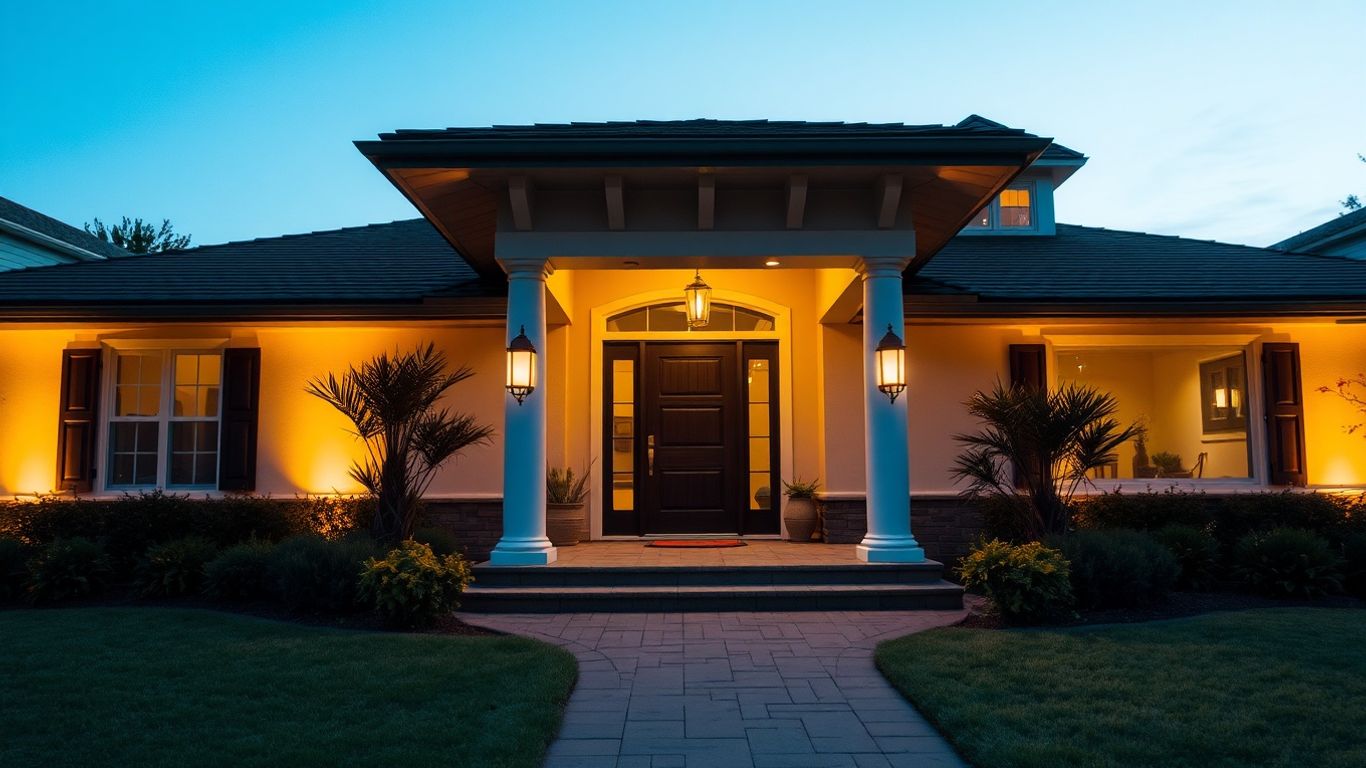
The entryway is the first thing people see when they arrive at your home, so getting the lighting right here is pretty important. It's not just about being able to see where you're putting your keys; it's about making a good first impression and creating a welcoming atmosphere. Think of it as your home's handshake.
Wall sconces and lanterns are your go-to options for this area. Sconces mount directly onto the wall, often flanking your front door or garage, while lanterns can offer a more decorative, sometimes hanging, touch. When picking these, consider the scale of your entrance. Tiny lights on a grand doorway can look a bit lost, and oversized fixtures on a small porch might feel overwhelming. Also, check if the fixture is rated for outdoor use, especially if it's exposed to the elements. A 'wet-rated' fixture can handle direct rain, while 'damp-rated' is fine for covered areas.
Here are a few things to think about:
- Style: Does it match your home's architecture? Modern, traditional, rustic – there are options for every look.
- Brightness: You want enough light to see clearly but not so much that it's glaring or intrusive.
- Coverage: Consider placing lights on both sides of the door or using a overhead fixture to ensure good visibility.
- Bulb Type: LED bulbs are a smart choice for energy efficiency and longevity. You can also explore smart bulbs for added convenience, allowing you to control them remotely or set schedules.
Getting the entryway lighting right means balancing practicality with aesthetics. It should be functional enough for safe passage but also inviting enough to make guests feel comfortable from the moment they arrive. It’s a small detail that can make a big difference to your home's overall appeal.
Patio Lights
Turning your patio into a usable space after dark is all about the right lighting. It’s not just about seeing where you’re going; it’s about creating an atmosphere for relaxing or entertaining. Think about how you use your patio – is it for quiet evenings with a book, or do you host barbecues and gatherings?
The type of lighting you choose will depend on the mood you want to create. For a cosy, inviting feel, softer, warmer lights are best. If you need more functional light for cooking or dining, you might want something a bit brighter. It’s a good idea to think about layering your lights, using a mix of ambient and task lighting to get the best effect.
Here are a few ideas for patio lighting:
- String Lights: These are brilliant for adding a bit of sparkle and a festive feel. Drape them along fences, pergolas, or even trees for a magical glow. They're great for ambient lighting.
- Lanterns: Whether they're hanging or freestanding, lanterns can provide a lovely, diffused light. Look for ones with a warm bulb inside to really set the mood.
- Wall Sconces: Mounted on the wall of your house or a garden structure, sconces can offer both general illumination and a stylish design element.
- Uplights: Positioned on the ground, these can highlight plants or features around your patio, adding depth and interest.
When picking out bulbs, consider the colour temperature. For patios, a warm white (around 2700K to 3000K) is usually best for creating that relaxed vibe. You can get these in LED bulbs, which are energy-efficient and last a long time. If you want more control, smart bulbs let you adjust brightness and even colour from your phone, which is handy for setting different moods throughout the evening.
Remember to check if your chosen fixtures are rated for outdoor use, especially if they'll be exposed to the elements. Damp-rated fixtures are fine for covered patios, but if yours is completely open, you'll need wet-rated ones.
Brighten up your outdoor space with our fantastic patio lights. Whether you're looking for a warm glow for summer evenings or a festive sparkle for parties, we've got you covered. Make your garden the place to be! Visit our website today to see the full range.
Bringing It All Together
So, that’s the lowdown on making your home look its best after dark. It’s not just about stopping yourself from tripping over the garden hose, is it? Good outdoor lights make your place feel safer, more welcoming, and honestly, just look a lot nicer from the street. We’ve chatted about different kinds of lights, from the ones that guide you up the path to the ones that make your house numbers stand out. Just remember to think about where you really need the light, what sort of vibe you're going for, and how bright things should be. And don't forget to give them a quick clean now and then; it really does make a difference. With a little bit of planning, you can have your home looking its best, come rain or shine.
Frequently Asked Questions
What's the main point of having lights outside my house?
Lights outside your house do a few important things. They make it safer by lighting up dark spots where people might hide, and they help you see where you're going so you don't trip. Plus, they make your home look really nice and welcoming when it's dark.
What are the different kinds of outdoor lights I can get?
There are quite a few! You have wall lights for your front door or garage, lights to make your garden look pretty, small lights for paths so you don't get lost, and bigger lights for your driveway. Some lights even have sensors that turn on when they detect movement.
How do I know how bright my outdoor lights should be?
It depends on where the light is going. For paths, you want them to be bright enough to see but not blinding, maybe around 100-200 lumens. For security, you'll want them much brighter, like 700 lumens or more. For just making things look nice, a softer glow is usually best.
Should I worry about the weather when picking outdoor lights?
Absolutely! You need lights that are made to be outside and can handle rain, wind, and sun. Look for things like 'wet rated' or 'damp rated' on the packaging. This means they're built tough to last a long time without breaking.
How can I make my outdoor lights look good together?
Think of it like decorating inside. You want a mix of different lights that work well together. For example, you could have nice lights by your door, some smaller ones along the path, and maybe some to highlight a tree. It's all about creating different layers of light so your home looks interesting and inviting.
How often should I clean my outdoor lights?
It's a good idea to give them a quick clean every few months, or whenever they look dusty or dirty. This helps them shine their best. Also, keep an eye out for any broken parts or bulbs that have gone out, and fix or replace them straight away.

