

Discover the Best Bathroom Lighting for a Perfectly Lit Home
Thinking about your bathroom lighting might not be the most exciting part of home decorating, but honestly, it makes a huge difference. Get it wrong, and your bathroom can feel a bit gloomy or harsh. Get it right, though? Suddenly, that small space feels bigger, brighter, and way more pleasant. It's not just about seeing yourself in the mirror; it's about setting the mood, whether you're rushing out the door in the morning or winding down at night. So, let's talk about how to nail the best bathroom lighting.
Key Takeaways
- Layering different types of light – overhead, task, and accent – makes your bathroom both functional and inviting.
- Vanity lighting is super important. Think sconces at eye level or fixtures that don't cast harsh shadows.
- Choosing the right bulbs, like warm LEDs, and adding dimmer switches really helps make your bathroom more versatile.
- Good bathroom lighting can totally change the feel of the room, making it look more spacious or adding a relaxing vibe.
- Don't forget about practicalities like moisture-rated fixtures and the right colour temperature for a comfortable atmosphere.
1. Vanity Lighting
When it comes to getting your bathroom just right, the lighting around your vanity is a pretty big deal. It's where you'll be doing most of your focused tasks, like shaving, applying makeup, or just generally making sure you look presentable before heading out. Getting this bit wrong can mean unflattering shadows or light that's too harsh, which isn't ideal.
The best approach for vanity lighting is often to use two light fixtures placed on either side of your mirror, roughly at eye level. This setup helps to illuminate your face evenly, cutting down on those pesky shadows that can make getting ready a bit of a guessing game. Aim for fixtures that are about 60 inches off the ground. If you've got a double vanity, you might need something a bit brighter or more spread out, especially if your bathroom doesn't get much natural light.
Here are a few things to think about:
- Fixture Placement: Side-mounted sconces are generally the go-to for even lighting. Avoid a single overhead light directly above the mirror, as this tends to cast shadows downwards.
- Bulb Choice: Look for bulbs that mimic natural daylight. LEDs are a great option because they're energy-efficient and come in various colour temperatures. Aim for a colour temperature around 3000K to 4000K for a bright but not overly clinical feel.
- Brightness: The amount of light you need depends on the size of your vanity and the natural light in the room. A good starting point is around 50 lumens per square foot, but you might need more or less.
Don't forget about dimmers! Being able to adjust the brightness of your vanity lights can make a huge difference, whether you need bright light for detailed tasks or a softer glow for a more relaxed atmosphere.
2. Ambient Lighting
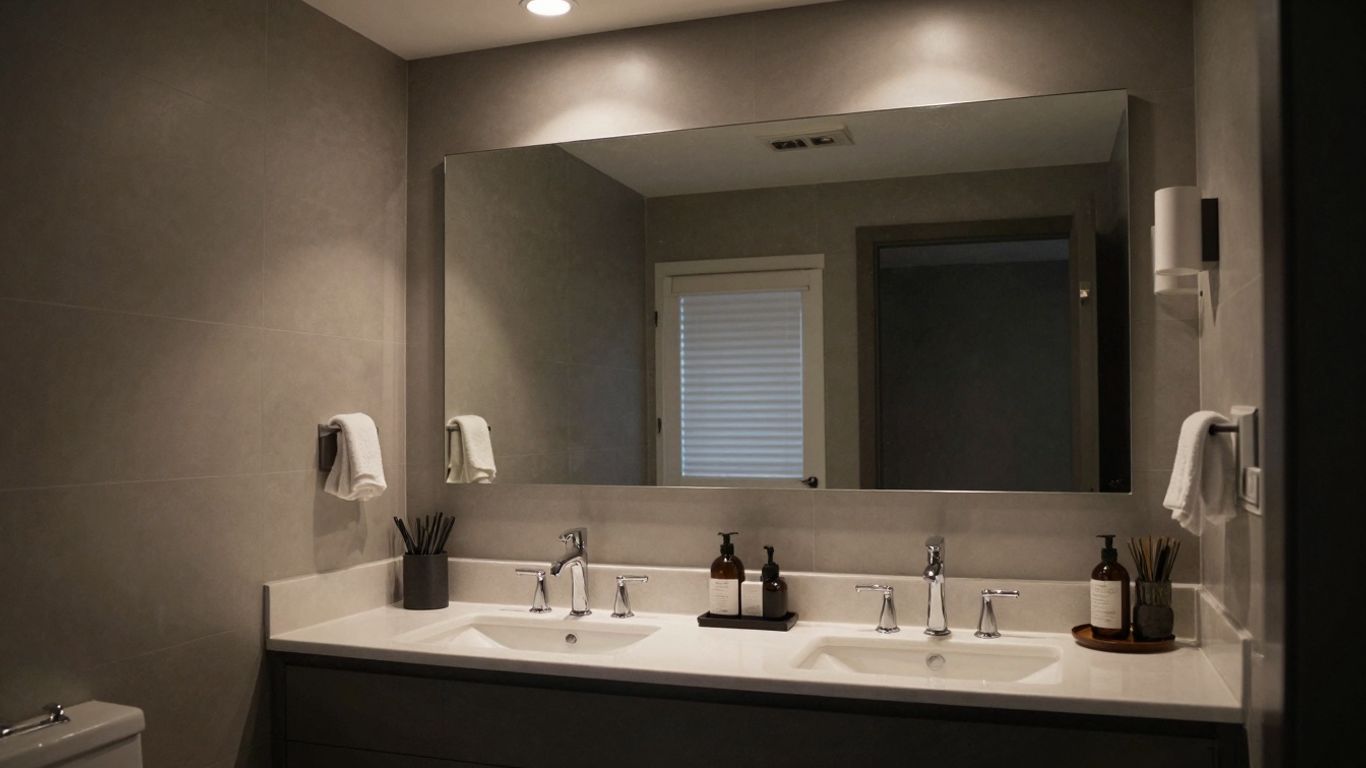
Ambient lighting is your bathroom's general illumination, the light that makes the whole space feel bright and safe to move around in. Think of it as the foundation for all your other bathroom lights. It should spread light fairly evenly across the room, reaching into all the corners.
Ceiling lights are the most common way to achieve this. You've got a few options here:
- Recessed Lighting: These are lights fitted directly into the ceiling. For a modern look or a larger bathroom, a few of these can really banish shadows. A good rule of thumb for spacing them is to divide your ceiling height by two – so, for an 8-foot ceiling, space them about 4 feet apart.
- Flush-Mounted Lights: If you're renting or in a newer build, you might already have one of these. Swapping out a basic fixture for something a bit more stylish, like a drum shade or a schoolhouse-style light, can make a big difference without much fuss.
- Pendant Lamps: While not usually the sole light source, a pendant can add a focal point and a touch of style, especially in a bigger bathroom. A central pendant can perk up a tired powder room, or a more decorative one can give a standalone tub a spa-like feel.
The goal is to create a comfortable, consistent glow that allows you to navigate the room with ease.
When planning your ambient lighting, consider the overall size of your bathroom. You'll want enough brightness to make the space feel welcoming and functional, but not so much that it feels harsh or glaring. It's about setting a pleasant mood for the entire room.
3. Task Lighting
Task lighting is all about getting the job done, whether that's shaving, applying makeup, or just seeing clearly. It's the focused illumination you need for specific activities, and it's usually found around your vanity mirror. Without good task lighting, you might end up with uneven foundation or a missed spot while shaving – nobody wants that!
The key is to position lights so they illuminate your face directly, minimising shadows.
Here are a few ways to nail your task lighting:
- Vanity Sconces: Placing lights on either side of your mirror, roughly at eye level, is a classic for a reason. It provides even light across your face.
- Light Bars: These can be mounted above or around your mirror. A horizontal bar above the mirror is a popular choice for a modern look.
- Integrated Mirror Lighting: Some mirrors come with built-in lighting, offering a sleek, all-in-one solution.
When choosing bulbs for task lighting, think about colour temperature. A neutral white (around 3500K to 4000K) is often best for clarity and accuracy, helping you see colours true to life. You'll want bulbs with a decent lumen output, but avoid anything too harsh that causes glare. Dimmers are also a great addition here, allowing you to adjust the brightness depending on the time of day or your needs.
Getting task lighting right means you can perform your daily routines with ease and precision. It's not just about brightness; it's about directing light effectively where you need it most, making your bathroom a more functional space.
4. Accent Lighting
Accent lighting is all about adding a bit of flair and drawing attention to specific features in your bathroom. Think of it as the jewellery for your room – it doesn't do the heavy lifting of illuminating the whole space, but it certainly makes it more interesting. This is where you can get a little creative and highlight things like textured tiles, a piece of art, or even an interesting architectural detail like an alcove.
It's a fantastic way to add depth and a touch of drama. You might use a small, directional spotlight to shine on a beautiful plant or a decorative vase. Or perhaps some subtle LED strip lighting tucked away under a floating vanity to create a soft glow that makes the fixture appear to float.
- Highlight architectural features: Use small spotlights or wall sconces to draw the eye to unique nooks, built-in shelving, or decorative mouldings.
- Showcase artwork or decor: Position a focused light source to illuminate a favourite print or sculpture.
- Create mood: Indirect accent lighting, like under-cabinet lights, can provide a soft, ambient glow without being harsh.
- Add visual interest: Consider lighting up the edges of a mirror or the base of a freestanding tub for a spa-like feel.
The goal here isn't to flood the room with light, but to strategically place it to create focal points and add personality. It's the finishing touch that can really make your bathroom feel special and well-designed, turning a functional space into something a bit more luxurious.
Accent lighting is your chance to play with light and shadow. It's less about seeing every detail and more about creating an atmosphere and drawing attention to the elements you love most in your bathroom design. Don't be afraid to experiment with different types of fixtures and placements to see what works best for your space.
5. Wall Sconces
Wall sconces are a fantastic way to add both style and practical light to your bathroom. They're brilliant for flanking mirrors, offering that all-important illumination for grooming tasks without casting harsh shadows. Think of them as the unsung heroes of bathroom lighting, bringing a touch of elegance and warmth.
These fixtures are particularly effective when placed at or just above eye level, ideally on either side of your vanity mirror. This positioning ensures your face is lit evenly, making it easier to apply makeup, shave, or just check your reflection.
Here's a quick look at why they're a top choice:
- Adds Charm: Sconces can introduce character and a softer feel to bathrooms, especially those with a lot of tile.
- Task-Focused Light: When positioned correctly, they provide excellent task lighting right where you need it most.
- Versatile Placement: Beyond the vanity, they can highlight architectural features or add light to darker corners.
When choosing bulbs for your sconces, aim for something that mimics natural light. Avoid bulbs that feel too cold or clinical; a warmer tone usually works best for creating a relaxing atmosphere. Dimmable options are also a great idea, allowing you to adjust the mood from bright and functional to soft and ambient.
Remember to consider the scale of your bathroom. In a smaller space, a single, more delicate sconce might be perfect, while a larger bathroom could handle a pair of more substantial fixtures. It’s all about balance and making sure the lighting complements the room, not overwhelms it.
6. Recessed Lighting
Recessed lighting, often called can lights or downlights, is a fantastic way to get clean, unobtrusive illumination in your bathroom. These lights are installed directly into the ceiling, meaning they don't take up any visual space, which can make a smaller bathroom feel a bit more open. They're brilliant for providing general, ambient light that covers the whole room without casting harsh shadows, especially if you place them strategically.
When planning recessed lighting, think about spacing. A good rule of thumb is to divide your ceiling height by two to get the ideal distance between each fixture. So, if you have an eight-foot ceiling, aim to space your lights about four feet apart. This helps ensure even light distribution across the entire space.
- Provides general, ambient illumination.
- Creates a clean, modern look.
- Can make smaller bathrooms feel more spacious.
- Minimises glare and shadows when positioned correctly.
For areas like the shower, you'll want to make sure you use fixtures that are rated for damp or wet locations, depending on whether water will directly hit the light. This is really important for safety and to make sure the lights last.
Recessed lights are a go-to for a reason. They offer a sleek, integrated look that doesn't interfere with other design elements. Just be sure to pick the right type of bulb – something that mimics natural light is usually best, avoiding anything too cold or clinical.
7. Flush-Mounted Lights
Flush-mounted lights are a really practical choice for bathrooms, especially if you're working with a tighter budget or have lower ceilings. They sit right up against the ceiling, so they don't take up any extra space, which is a big win in smaller bathrooms.
They offer a clean, unobtrusive look that blends well with most decor styles. You can find them in all sorts of designs, from simple, plain discs to more decorative options with frosted glass or interesting bases. They're great for providing general, all-over light, making sure there aren't too many dark corners.
When picking out flush-mounts, think about:
- Size: Make sure the fixture isn't too big or too small for the room. A common mistake is getting one that overwhelms a small space or gets lost in a larger one.
- Material and Finish: Consider how it will look with your other bathroom fixtures. Chrome, brushed nickel, or even matte black can all work well.
- Light Output: Check the lumens to get an idea of how bright the light will be. You might want a brighter one for general illumination and then supplement with other lighting types.
Flush-mounted lights are a solid, no-fuss option for consistent, overhead illumination. They're particularly useful in bathrooms where you need to maximise headroom or want a lighting solution that's out of the way.
While they're good for overall brightness, you'll likely still want to add other lights, like vanity lighting, for tasks like shaving or applying makeup. They're a workhorse fixture, not usually the star of the show, but an important part of a well-lit bathroom.
8. Pendant Lamps
Pendant lamps can add a touch of elegance and a softer glow to your bathroom, especially in larger spaces or powder rooms. They hang from the ceiling, offering a decorative element that can also provide good general illumination. Think of them as a stylish alternative to standard ceiling lights, bringing a bit of personality to the room.
These fixtures are brilliant for creating a focal point and can be used to highlight specific areas or simply to add a decorative flair. They work particularly well over a freestanding bath or in a corner that needs a bit more light and visual interest. When choosing, consider the size of your bathroom; you don't want a pendant that overwhelms the space.
Here are a few ways pendant lamps can be incorporated:
- Ambient Lighting: A single, larger pendant can provide a good amount of general light for the whole room.
- Task Lighting: Smaller pendants, perhaps hung in pairs, can offer focused light over a vanity area, though they need to be positioned carefully to avoid shadows.
- Decorative Accent: Even a small, stylish pendant can add a touch of luxury and visual appeal, especially in a guest bathroom.
When selecting bulbs for your pendant lights, aim for a warm white light (around 2700K to 3000K) to create a relaxing atmosphere. Dimmable LED bulbs are a great choice, offering flexibility and energy efficiency. Just make sure any fixture you choose is rated for use in a bathroom environment, considering moisture levels.
Pendant lamps offer a fantastic opportunity to inject style into your bathroom. They can transform a functional space into something a bit more special, acting as a statement piece without sacrificing practicality. Just remember to balance their decorative appeal with the need for effective lighting.
9. Light Bars
Light bars, often called linear lights, are a really neat option for bathrooms, no matter the size. They offer a clean, modern look and are fantastic for providing consistent, reliable illumination. Think of them as a super-efficient way to get light where you need it, especially around mirrors or as a general light source.
These fixtures are particularly good at casting an even glow, minimising those annoying shadows that can pop up with single overhead lights.
When choosing a light bar, consider:
- Length: Make sure it fits the space you have in mind, whether it's above a vanity or along a wall.
- Brightness (Lumens): Higher lumens mean a brighter light. You'll want to balance this with dimmable options if possible.
- Colour Temperature: Aim for something around 3000K to 4000K for a natural, flattering light that's bright enough for tasks but still feels inviting.
Light bars are a versatile choice, blending functionality with a sleek aesthetic. They're a go-to for many when a straightforward, effective lighting solution is needed, offering a modern alternative to traditional fixtures.
10. Dimmable Lights
Having lights you can dim in the bathroom is a bit of a game-changer, honestly. It’s not just about saving a bit on the electricity bill, though that’s a nice bonus. It’s more about having control over the atmosphere. Think about it: you need bright, clear light for shaving or applying makeup in the morning, right? But then, when you’re winding down with a bath in the evening, you probably want something softer, more relaxing. A dimmer switch lets you switch between those moods easily.
It’s also a clever way to have a gentle nightlight. If you need to pop in during the night, a dimmed light won’t blind you like a full-strength bulb would. It’s a small thing, but it makes a difference.
- Morning Rush: Crank up the brightness for tasks.
- Evening Unwind: Dial it down for a spa-like feel.
- Middle of the Night: A low setting provides just enough light without being jarring.
When choosing bulbs for dimmable fixtures, make sure they're actually designed to be dimmable. Not all LED bulbs play nicely with dimmer switches, so check the packaging. You don't want to end up with flickering lights or a bulb that just won't dim properly.
The flexibility offered by dimmable lights means you can tailor the bathroom's illumination to suit any activity or mood, transforming the space from a purely functional area into a more versatile and comfortable environment.
11. LED Bulbs
When you're thinking about bathroom lighting, the type of bulb you choose is a pretty big deal. Gone are the days when you just screwed in whatever you found. These days, LED bulbs are really the way to go for most bathrooms. They're super energy-efficient, which is great for your bills, and they last for ages, meaning you won't be up a ladder changing bulbs every few months. Plus, the range of LED bulbs available now is massive. You can get them in all sorts of colour temperatures, from a warm, cosy glow to a bright, crisp white, so you can really tailor the light to your needs.
Choosing the right colour temperature and brightness is key for a functional bathroom.
Here's a quick look at why LEDs are a smart choice:
- Energy Savings: They use significantly less electricity than older bulb types.
- Longevity: Expect them to last many years, reducing hassle and waste.
- Versatility: Available in various colour temperatures (Kelvin) and brightness levels (lumens) to suit different tasks and moods.
- Durability: Generally more robust than traditional bulbs.
When selecting LED bulbs for your bathroom, aim for a colour temperature between 3000K and 4000K. This range provides a natural, flattering light that's bright enough for grooming tasks without feeling harsh or overly cold. A good Colour Rendering Index (CRI) of 90 or higher is also recommended to ensure colours appear true to life.
Don't forget to check if your chosen fixture has specific bulb requirements, but for general lighting, vanity areas, and even shower lights, LEDs are a fantastic, modern solution. They're a simple swap that can make a big difference to both the look and feel of your bathroom.
12. Moisture-Rated Fixtures
Bathrooms are, by their very nature, steamy places. All that hot water from the shower and bath means there's a lot of moisture in the air, and standard light fittings just aren't built to handle it. That's where moisture-rated fixtures come in. These are specifically designed to withstand damp conditions, protecting the electrical components from corrosion and short circuits.
It's really important to choose fixtures that are rated for damp or wet locations, depending on where they'll be installed. For general bathroom areas, a 'damp-rated' fixture is usually sufficient. However, if a light fitting is going to be in the direct splash zone of a shower or bath, it absolutely needs to be 'wet-rated'.
Here's a quick breakdown:
- Damp-rated: Suitable for areas with moderate humidity, like near a sink or in the main bathroom space away from direct water spray.
- Wet-rated: Designed for areas that will experience direct water contact, such as inside a shower enclosure or directly over a bathtub.
Ignoring this can lead to premature failure of the light fitting, or worse, a safety hazard. So, always check the packaging or product description for the appropriate rating before you buy.
When you're looking at fixtures, you'll often see an IP (Ingress Protection) rating. For bathrooms, you'll want to look for fixtures with an IP rating of at least IP44 for general areas, and IP65 or higher for wet locations like inside a shower. This rating tells you how well the fixture is protected against solid objects (like dust) and liquids (like water).
Using the right kind of bulb inside these fixtures is also key. While many LED bulbs are designed to handle moisture, it's always best to double-check their specifications too, especially if they're going into a wet-rated fitting.
13. Statement Lighting
Sometimes, your bathroom needs a bit of drama, a real focal point that says, 'Wow!' That's where statement lighting comes in. Think of it as the jewellery for your bathroom – it's not just about seeing, it's about being seen.
These aren't your average, run-of-the-mill fixtures. We're talking about oversized pendant lights that hang low, bold vanity lights that command attention, or even a small, stylish chandelier over the tub. The goal is to create a visual anchor, something that draws the eye and adds personality to the space. It’s a fantastic way to inject your personal style, whether that's modern and minimalist or more ornate and traditional.
When choosing a statement piece, consider the scale of your bathroom. A tiny room might feel overwhelmed by a huge fixture, while a large space can handle something more substantial. It's all about balance.
- Oversized Pendants: These can be a real showstopper, especially in larger bathrooms or over a freestanding bath.
- Bold Vanity Fixtures: Forget subtle. Think sculptural designs or dramatic finishes that make your mirror area pop.
- Unique Chandeliers: Even a small, decorative chandelier can add a touch of luxury and transform a simple powder room.
Don't be afraid to be a little daring with your statement lighting. It's your chance to make a real impression and turn an everyday space into something special. Just make sure it complements the overall style of your bathroom, rather than clashing with it.
14. Smart Lighting Solutions
These days, you can get smart bulbs for pretty much anything, and bathroom lighting is no exception. It's a bit of a game-changer, honestly. Imagine being able to control the brightness or even the colour of your bathroom lights using just your phone or a voice command. It sounds a bit futuristic, but it's really quite practical.
Smart lighting systems let you set different moods. You could have bright, crisp light for your morning routine, then dim it down to a warm, relaxing glow for an evening soak. Some systems even let you schedule your lights to come on gradually, mimicking a sunrise – a much nicer way to wake up than a jarring alarm.
Here's a quick look at what makes smart lighting so useful:
- App Control: Adjust brightness, colour, and schedules from your smartphone.
- Voice Activation: Integrate with smart assistants like Alexa or Google Assistant for hands-free control.
- Scheduling: Set lights to turn on or off at specific times, useful for security or convenience.
- Energy Savings: Dimming and scheduling can help reduce electricity consumption.
While the initial cost might seem a bit higher than standard bulbs, the convenience and customisation options are pretty significant. Plus, you can often find smart LED bulbs that are energy-efficient, so you save money in the long run.
It's a simple way to add a touch of modern convenience to your bathroom, making it more functional and comfortable throughout the day.
15. Gold and Brass Finishes
When you're thinking about updating your bathroom, the finishes on your fixtures can make a surprisingly big difference. Gold and brass are really having a moment again, and honestly, they bring a lovely warmth to a space. Forget any old-fashioned ideas you might have; modern gold and brass finishes are often quite sleek and sophisticated.
These metallic tones can really make a bathroom feel more luxurious. They pair well with a lot of different tile colours and styles, from classic white subway tiles to more modern, dark stone effects. It's a way to add a bit of glamour without going overboard.
Here's a quick look at why they work so well:
- Warmth and Richness: They add a cosy, inviting feel that cooler metals sometimes lack.
- Versatility: They can suit both traditional and contemporary bathroom designs.
- Statement Piece: A gold or brass tap or light fitting can act as a focal point.
- Durability: Many modern brass and gold finishes are treated to resist tarnishing, meaning less upkeep.
Choosing gold or brass doesn't mean your whole bathroom has to be that colour. You can mix and match finishes, perhaps using brass for your main taps and light fixtures, and then a brushed nickel for smaller accessories. It's all about creating a balanced look that feels personal to you.
16. Sleek, Modern Fixtures
When you're aiming for that clean, contemporary look in your bathroom, the fixtures you choose really make a difference. Sleek, modern designs often feature minimalist shapes, clean lines, and neutral finishes. Think simple geometric forms or smooth, unadorned surfaces. These kinds of lights tend to blend well with other modern bathroom elements, like frameless mirrors or minimalist vanity units.
They're all about understated elegance and functionality.
Choosing the right type of fixture within this style is key. You might consider:
- Recessed lighting: These are built into the ceiling, offering a very clean look with no visible hardware.
- Linear light bars: Often found above or beside mirrors, these provide a continuous, streamlined light source.
- Simple pendant lights: Opt for designs with minimal detailing and perhaps a matte black, brushed nickel, or chrome finish.
These fixtures are a great way to add a touch of sophistication without overwhelming the space. They work particularly well in smaller bathrooms where you want to keep the visual clutter to a minimum. You can find a wide range of indoor wall lights that fit this modern aesthetic, offering both form and function.
When selecting modern fixtures, pay attention to the materials and finishes. Matte finishes, brushed metals, and even some high-gloss whites or blacks can contribute to the contemporary feel. Avoid anything too ornate or traditional, as it will clash with the overall modern theme you're trying to achieve.
It's also worth thinking about the type of bulbs you use. For a truly modern setup, energy-efficient LED bulbs are a natural fit, often available in slim profiles that complement the fixture design. You can get these as led light bulbs uk or in other regions. The goal is a cohesive look where the lighting feels like an integrated part of the bathroom's design, rather than an afterthought.
17. Vertical Lights
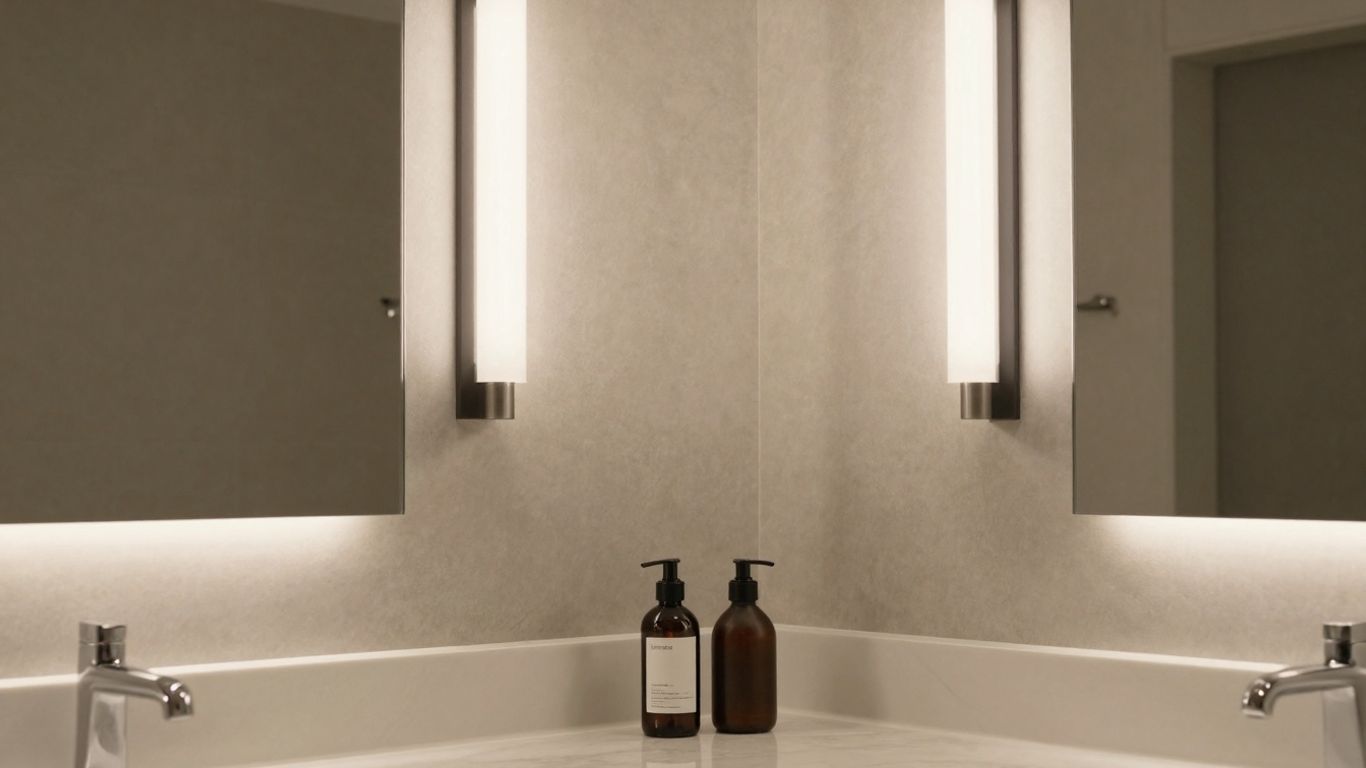
When you're thinking about bathroom lighting, most people immediately picture lights above the mirror or a central ceiling fixture. But have you considered going vertical? Vertical lighting can be a really clever way to add both style and function to your bathroom, especially if you're working with a smaller space or want to highlight specific architectural features.
Think about wall sconces that extend upwards, or slim light bars positioned along the sides of a mirror or a tall cabinet. These types of lights can draw the eye upwards, making a room feel larger and more open. They're also brilliant for providing consistent, shadow-free illumination right where you need it, like at the vanity.
Here are a few ways vertical lights can make a difference:
- Illuminating narrow spaces: Perfect for tight corners or hallways within a larger bathroom.
- Highlighting architectural details: Use them to draw attention to vertical lines, tall plants, or decorative wall panels.
- Creating a sense of height: They can make your ceiling appear higher, which is a great trick for smaller bathrooms.
- Providing balanced task lighting: When placed on either side of a mirror, they offer even light for grooming.
The key is to use them strategically to complement your other lighting sources, rather than relying on them as your sole light. They work wonderfully alongside ambient ceiling lights and focused vanity lighting to create a layered and inviting atmosphere. It's all about building up your light sources for the best effect.
Vertical lighting isn't just about adding more light; it's about directing it in a way that shapes the perception of your space. It's a subtle but effective design choice that can really change how a bathroom feels and looks.
18. Shower Lights
When it comes to lighting your shower, safety and functionality are key. You'll want to think about fixtures that can handle moisture, as water will either be directly hitting them or they'll be exposed to a lot of steam.
Recessed lighting is a popular choice for showers, especially in walk-in designs. It keeps the ceiling clean and provides good general illumination. When picking out these lights, make sure they're rated for damp or wet locations, depending on how much water exposure they'll get. For instance, a light directly under the showerhead needs a wet-rated fixture, while one further away might just need a damp rating.
Here are a few things to consider:
- Fixture Rating: Always check for 'damp' or 'wet' location ratings. 'Wet' is for areas where water will directly hit the fixture, like under a showerhead. 'Damp' is for areas with high humidity but no direct water spray.
- Bulb Type: Opt for LED bulbs. They're energy-efficient and last a long time, which is handy when they're in a hard-to-reach spot. Frosted or opal lenses can help diffuse the light, making it softer and less glaring.
- Placement: For a standard shower, one overhead light is usually enough. If you have a larger shower or a double shower, you might want to consider two lights for better coverage. Some people even add a small light inside a shower niche to make it easier to find shampoo and soap.
Don't forget about the lens material. Plastic lenses can turn yellow over time, which isn't ideal. Glass lenses tend to hold up better and look cleaner for longer, so it's worth looking for those if you want your shower lighting to stay looking good.
Think about the overall look too. While practicality is important, you can still find shower lights that complement your bathroom's style. Whether it's a sleek, modern design or something a bit more traditional, there are options out there.
19. Bathroom Ceiling Lights
Ceiling lights are the backbone of bathroom illumination, providing that all-important general glow. Think of them as the main event, setting the overall mood for the space. When you're choosing, you've got a few main types to consider.
Flush-mounted lights are a solid, budget-friendly choice. They sit right up against the ceiling, so they don't take up any visual space, which is great for smaller bathrooms. They give off a decent amount of light, making them good for overall brightness.
Then there are pendant lights. These hang down from the ceiling and can add a bit of style. You can get them in all sorts of designs, from simple globes to more elaborate fixtures. They're a nice way to add a bit of personality without being too over the top.
Recessed lighting, often called downlights, involves lights fitted into the ceiling itself. They give a clean, modern look and are brilliant for providing even light distribution. Just make sure they're rated for damp areas if they're going anywhere near a shower or bath.
| Type of Ceiling Light | Best For | Considerations |
|---|---|---|
| Flush-Mounted | General illumination, small bathrooms | Budget-friendly, unobtrusive |
| Pendant Lights | Adding style, general illumination | Can hang low, variety of designs |
| Recessed Lights | Even light distribution, modern look | Needs damp-rated fixtures near water |
It's really important to think about the colour temperature of your bulbs. For bathrooms, you generally want something that's not too harsh. A warmer light, around 3000K to 4000K, tends to be more flattering and relaxing, reducing shadows and making the space feel more inviting. Avoid those super bright, blue-ish lights if you can.
When planning your ceiling lights, remember that even distribution is key. You don't want dark corners or glaring spots. Consider how the light will spread across the room to create a comfortable and functional atmosphere.
20. Decorative Lighting
Sometimes, a bathroom needs more than just practical light. That's where decorative lighting comes in. It's all about adding a bit of flair and personality to the space, making it feel less like a utility room and more like a sanctuary. Think of it as the jewellery for your bathroom.
Decorative lighting can take many forms. It might be a stylish wall sconce that draws the eye, a small, elegant pendant light hanging over a vanity, or even some subtle strip lighting tucked away to highlight a feature. It’s not necessarily about providing bright, functional light, but more about creating an atmosphere and adding visual interest. This type of lighting is your chance to get a bit experimental and show off your personal style.
Here are a few ideas to get you started:
- Statement Fixtures: Consider a unique ceiling light or a bold vanity fixture that acts as a focal point.
- Highlighting Features: Use accent lighting, like small spotlights or sconces, to draw attention to architectural details, artwork, or beautiful tiles.
- Adding Warmth: Small table lamps on shelves or countertops can introduce a cosy, inviting glow, especially in larger bathrooms.
- Subtle Touches: Think about integrated LED strips under cabinets or around mirrors for a modern, ambient effect.
When choosing decorative lights, remember to consider the overall style of your bathroom. You want the fixtures to complement your existing decor, not clash with it. It’s about adding character and a touch of luxury without sacrificing functionality.
Don't forget about the bulbs themselves. Even decorative fixtures can benefit from the right bulb. Look for warmer colour temperatures (around 2700K to 3000K) to create a more relaxing mood, especially for evening use. Dimmable options are also a great idea, allowing you to adjust the ambiance as needed.
21. Small Lamps
Sometimes, you just need a little extra light, and that's where small lamps come in handy for the bathroom. They're not usually the main source of light, but they can add a lovely warmth and a bit of flexibility to your bathroom's illumination. Think about placing a small lamp on a shelf or a wider countertop if you have the space. It's a great way to introduce a softer glow, perhaps for those evenings when you want a more relaxed atmosphere.
These little additions can really make a difference, especially in larger bathrooms where you might have a bit of surface area to play with. They can sit alongside your main lighting, offering a secondary light source that's easy to switch on and off. It's all about layering your light to create different moods.
- Adds a cosy feel: A small lamp can make a bathroom feel more like a living space, less like a purely functional room.
- Flexible lighting: Easy to move around if you redecorate or want to change the lighting setup.
- Softens the light: Provides a gentler illumination compared to overhead fixtures.
- Decorative element: Can be chosen to match your bathroom's style, adding a personal touch.
When picking out a lamp, remember to consider the bulb. You'll want something that gives off a warm, inviting light, not too harsh. Look for LED bulbs that mimic natural light, as they're energy-efficient and long-lasting. For bathrooms, a colour temperature around 3000K is often a good bet – it's bright enough for tasks but still feels comfortable.
While not every bathroom has room for a table lamp, their ability to introduce a softer, more ambient light makes them a worthwhile consideration for those with the space. They're a simple way to add character and a touch of comfort.
22. Chandeliers
While you might think of chandeliers as being strictly for dining rooms or grand hallways, they can actually bring a surprising amount of flair to a bathroom. A well-chosen chandelier can transform a standard bathroom into a luxurious sanctuary. It's all about picking the right size and style to suit your space. For smaller bathrooms, a more compact, perhaps even a semi-flush mount chandelier, can provide that touch of elegance without overwhelming the room. In larger master bathrooms, you have more freedom to go for something more dramatic and eye-catching.
When selecting a chandelier for your bathroom, consider these points:
- Moisture Resistance: Bathrooms are humid environments. Look for chandeliers specifically rated for damp or wet locations to ensure longevity and safety. This is non-negotiable for any fixture in a bathroom.
- Size and Scale: Measure your bathroom carefully. A chandelier that's too big can feel cramped, while one that's too small might get lost. Aim for a fixture that's proportionate to the room's dimensions and ceiling height.
- Style Cohesion: Think about the overall aesthetic of your bathroom. Is it modern, traditional, or perhaps a bit of a mix? Choose a chandelier that complements your existing decor, whether it's sleek metal, crystal-adorned, or something more rustic.
- Bulb Type: Consider the type of bulbs the chandelier uses. LED bulbs are a great choice for their energy efficiency and long lifespan. Also, think about the colour temperature – warmer tones often create a more relaxing atmosphere, which is lovely for a bathroom.
Chandeliers can add a real 'wow' factor to a bathroom, making it feel more like a spa or a boutique hotel. Don't be afraid to be bold, but always remember to balance the visual impact with practical considerations like moisture resistance and appropriate sizing for the space.
23. Rope Lights
Rope lights can be a bit of a hidden gem when it comes to bathroom lighting. They're not the first thing most people think of, but they can add a really nice, subtle glow. You can use them to create a soft, ambient light that's perfect for winding down in the evening.
Think about tucking them behind a mirror or along the top of a vanity cabinet. This way, the light source itself isn't directly visible, just the gentle illumination it casts. It's a great way to add a bit of mood lighting without being too in-your-face.
- Subtle Ambiance: Creates a soft, diffused light.
- Hidden Illumination: Can be concealed for a clean look.
- Versatile Placement: Works well around mirrors, under cabinets, or along ledges.
When choosing rope lights, look for ones that are rated for damp or wet locations, just like other bathroom fixtures. This is important because bathrooms can get steamy, and you want your lights to be safe and last a long time. Also, consider the colour temperature; a warmer white (around 2700K-3000K) will feel more relaxing than a bright, cool white.
Using rope lights is a clever way to add a layer of light that feels both modern and cosy. It's all about creating that spa-like atmosphere right in your own home.
24. Bath Bars
Bath bars, also known as linear lights, are a really practical choice for bathrooms, whether they're on the smaller side or quite spacious. They offer reliable illumination, making them a go-to for many when they need consistent lighting.
These fixtures are brilliant for providing focused light, especially around the vanity area. Unlike a single overhead light that can cast unflattering shadows, a well-placed bath bar can distribute light more evenly. This is super helpful for tasks like shaving, applying makeup, or even just seeing your reflection clearly.
When choosing a bath bar, think about the overall style of your bathroom. They come in a wide range of designs, from sleek and modern to more traditional looks. Some popular finishes include brushed nickel, chrome, and even matte black, which can add a touch of sophistication.
- Even Light Distribution: Positioned horizontally, often above or beside a mirror, they spread light across your face, minimising shadows.
- Space Saving: Their linear design means they don't take up as much visual space as some other fixtures, making them ideal for smaller bathrooms.
- Versatile Style: Available in numerous designs to complement various bathroom aesthetics.
- Energy Efficiency: Many modern bath bars use LED technology, which is great for saving on electricity bills and lasts a long time.
Remember to consider the colour temperature of the bulbs you use with your bath bar. For a more relaxing and flattering light, opt for warmer tones (around 3000K). This will make your bathroom feel more inviting and reduce harshness, especially in the evening.
If you're looking for a fixture that combines functionality with a clean aesthetic, a bath bar is definitely worth considering. It's a simple yet effective way to improve your bathroom's lighting setup.
25. Mirror Lighting and more
When it comes to getting your bathroom just right, the mirror is a bit of a focal point, isn't it? And how you light it makes a huge difference. You've probably seen those fancy hotel bathrooms with lights right around the mirror – that's often called 'vanity lighting', and it's all about making sure you can see yourself clearly for all those grooming tasks. Think about it: applying makeup or shaving needs good, even light, and you don't want shadows making you look like you haven't slept in a week.
The placement of lights around your mirror is key to avoiding unflattering shadows.
If you've got a single mirror, a light fixture directly above it can work, but try to find one with a frosted or opaque cover. A bare bulb shining straight down can create harsh shadows under your eyes and nose. Alternatively, placing lights on either side of the mirror, roughly at eye level, is a really popular choice. This frames your face nicely and gives you a more even glow. The size and shape of your mirror will definitely influence what works best. A small round mirror in a downstairs loo might only have room for a single light above, whereas a big double vanity could handle two lights on each side.
Here are a few things to consider when choosing bulbs for your mirror lighting:
- Wattage: For larger bathrooms, you might want bulbs around 75 watts. Smaller rooms or powder rooms can often get away with 45 watts, especially if you're not doing intricate makeup application there.
- Colour Temperature: Aim for bulbs that mimic natural light. Something around 3000K to 4000K is usually a good bet – bright enough to be functional but not so cold it feels like a laboratory.
- Bulb Type: LED bulbs are a smart choice these days. They last ages and use less energy. You can find them in all sorts of styles, from frosted to clear, so you can match them to your fixture.
Beyond the mirror itself, think about how you can add layers of light. Dimmers are brilliant for setting the mood – bright for busy mornings, soft for a relaxing evening soak. And don't forget about moisture-rated fixtures, especially if you're thinking about lighting in or near the shower. It's all about making your bathroom both a practical space and a bit of a sanctuary.
Thinking about how to make your space shine? Proper lighting can totally change the feel of a room. From bright task lights to soft ambient glows, the right bulbs make all the difference. Explore our wide range of lighting solutions on our website to find the perfect fit for your home or office. Visit us today and let your space sparkle!
Wrapping Up Your Bathroom Lighting Journey
So, there you have it. Getting your bathroom lighting just right isn't as complicated as it might seem. By thinking about different types of light – like the general overhead kind, the focused ones for your mirror, and maybe a little something extra for atmosphere – you can really change how your bathroom feels. Remember those warmer bulbs and dimmer switches? They're game-changers for making the space work for you, whether you're rushing in the morning or chilling out in the evening. A well-lit bathroom is more than just practical; it makes the whole home feel a bit nicer. Give it a go, and see what a difference good lighting can make.
Frequently Asked Questions
What's the best way to light up a bathroom?
The best way is to use a mix of different lights. Think about lights for general brightness (like ceiling lights), lights for specific jobs (like above the sink for grooming), and lights that make things look nice (like highlighting tiles). This layered approach makes the bathroom look good and work well.
Are LED lights a good choice for bathrooms?
Yes, absolutely! LEDs are great for bathrooms because they don't use much electricity and last a really long time. Plus, you can get them in different shades of light to suit exactly what you need.
What colour light is best for a bathroom?
A light temperature between 3000K and 4000K is usually recommended. This gives a natural-looking light that's bright enough for tasks but still cosy and welcoming. It's not too yellow and not too blue, making it flattering for everyone.
Should I add decorative lights to my bathroom?
Definitely! Adding decorative lights, such as stylish wall lights, cool strip lights, or even a small fancy chandelier, can really add your own personality and flair to the bathroom.
How can I make my bathroom lighting better?
You can improve your bathroom lighting by using different types of lights together, like general, task, and decorative lights. Also, installing dimmer switches lets you change the brightness for different moods or activities. Using modern decorative lights can also give your bathroom a fresh new look.
What are the latest trends in bathroom lighting?
Right now, people are loving sleek, modern fixtures with simple designs. Warm metal colours like gold and brass are also making a comeback. Many are also choosing smart lighting systems that you can control with your phone for ultimate convenience.

