

Mastering Interior Lighting Design: From Ambient Glow to Task Focus
Getting the lighting right in your home can feel a bit tricky, can't it? It's not just about sticking a bulb in a socket; it's about making a space feel just right. Whether you want a cosy glow for movie nights or bright light for reading, the way you light your rooms makes a huge difference. This guide is here to help you figure out how to use different types of light, from the general background feel to focused beams, to make your home look and feel its best. We'll look at how light can change a room's mood and how to pick the right bits and pieces to get the job done.
Key Takeaways
- Ambient lighting is the base layer, providing general light to set the mood and make a room comfortable.
- Task lighting focuses light where you need it for specific activities, like reading or cooking, improving usability.
- Accent lighting adds drama and highlights features like artwork or architectural details, creating visual interest.
- Matching light colour temperature and fixture style to your room's materials and overall design is important for a cohesive look.
- Using dimmers and smart controls lets you adjust lighting for different times and activities, saving energy and creating flexible atmospheres.
Understanding Ambient Lighting: The Foundation Of Interior Lighting Design
Ambient lighting is basically the main light in a room. Think of it as the general glow that makes a space feel lit up and comfortable. It's not about highlighting one specific thing or helping you read a book; it's more about setting the overall mood and making sure you can see where you're going without bumping into things. It’s the first layer of light you’d think about when designing a room, and it really sets the tone for everything else.
The Essence Of Ambient Illumination
At its heart, ambient lighting is about creating a comfortable, even spread of light. It’s the background music of your lighting scheme. This type of lighting fills the space, softening shadows and making the room feel welcoming. It’s not harsh or glaring; it’s designed to be subtle and pervasive. The goal is to provide enough light for general visibility without creating a sterile or overly bright environment. It’s the light that allows you to move around a room safely and comfortably, whether you’re just passing through or settling in for the evening. It’s the foundation upon which other lighting layers, like task or accent lighting, are built.
Setting The Scene In Diverse Spaces
How you use ambient lighting can change quite a bit depending on the room. In a living room, you might want a warmer, softer glow that encourages relaxation, perhaps from a central ceiling fixture or strategically placed floor lamps. For a kitchen, you might need something a bit brighter and more neutral to help with food preparation, but still with a welcoming feel. Bedrooms often benefit from a gentle, calming light that helps you wind down. Even hallways need a basic level of ambient light to guide you safely. The key is to tailor the intensity and colour of the light to the room's primary function and the atmosphere you want to create.
- Living Rooms: Aim for a warm, inviting light, often with dimming capabilities to adjust for different activities.
- Kitchens: A slightly brighter, more neutral light is good for general visibility, complementing task lighting over work surfaces.
- Bedrooms: Soft, warm light promotes relaxation and a sense of calm.
- Hallways & Staircases: Focus on even, safe illumination to prevent trips and falls.
Balancing Brightness And Uniformity
Getting the balance right with ambient lighting is key. Too little light, and the room feels dim and unwelcoming. Too much, and it can feel harsh and uninviting, like an office space. Uniformity is also important; you don't want bright spots and dark corners. This is where choosing the right fixtures comes in. Recessed ceiling lights, flush mounts, or even cove lighting can provide a nice, even spread. Sometimes, using multiple sources of ambient light, like a combination of ceiling fixtures and floor lamps, helps achieve a more balanced and pleasing effect. It’s about creating a consistent, comfortable level of light throughout the space.
Achieving the right ambient light means thinking about how the light sources work together. It's not just about one big light in the middle of the ceiling. Using a few different types of fixtures, placed thoughtfully, can make a big difference in how the whole room feels. It’s about creating a soft, even glow that feels natural and comfortable, not artificial or stark.
Here’s a quick look at some common ambient lighting fixtures:
| Fixture Type | Description |
|---|---|
| Recessed Downlights | Lights fitted into the ceiling, providing a clean, unobtrusive general light. |
| Flush Mounts | Fixtures that sit directly against the ceiling, good for lower ceilings. |
| Chandeliers | Often decorative, they can provide significant ambient light in larger rooms. |
| Floor Lamps | Can add ambient light and warmth, especially in living areas. |
| Cove Lighting | Hidden lights in ceiling coves, washing walls or ceilings with soft light. |
Mastering Task Lighting For Enhanced Functionality
Optimising Illumination For Daily Activities
Task lighting is all about making sure you can actually do things in a room without squinting or straining your eyes. It’s the focused beam that helps you read a book, chop vegetables, or work at your desk. Unlike ambient light, which just fills the space, task lighting is directed precisely where you need it. Think of those under-cabinet lights in the kitchen that get rid of all the shadows when you're prepping food, or a good reading lamp next to your favourite armchair. The goal is to provide enough brightness for the job at hand, but without creating glare or making the rest of the room feel too dark by comparison. It’s about precision and practicality.
- Kitchens: Under-cabinet lights, spotlights over work surfaces.
- Home Offices: Desk lamps, adjustable floor lamps.
- Living Areas: Reading lamps, focused pendants over tables.
- Workshops: Bright, directional overhead lights.
Positioning For Visual Comfort And Clarity
Where you put your task lights makes a huge difference. You don't want the light shining directly into your eyes, and you certainly don't want your own body casting a shadow over what you're trying to do. For things like reading or working at a desk, the light source should ideally be slightly behind and to the side of you, or positioned so it shines down onto the task area without causing reflections on shiny surfaces. In kitchens, placing lights under cabinets means the light falls onto the worktop, not into your eyes. For vanity areas, wall lights at eye level can provide a more flattering and even light than a single overhead bulb. It’s a bit of a balancing act to get it right.
Proper placement stops you from having to lean in awkwardly or strain to see. It makes the whole experience of using the space much more pleasant and less tiring.
Integrating Task Lights With Ambient Schemes
Task lighting shouldn't feel like an afterthought or a separate system. It needs to work with the general lighting in the room. If your ambient light is warm and cosy, your task lights should ideally have a similar colour temperature so they don't clash. You also don't want your task lights to be so bright that they completely overpower the ambient light, making the room feel harsh. It’s about layering – the ambient light sets the mood, and the task lights add the necessary punch for specific activities. Many modern fixtures are designed with this in mind, offering adjustable brightness or directional beams that can be controlled independently but still look like they belong together. It’s about creating a cohesive look where function and atmosphere go hand-in-hand.
Creating Depth And Drama With Accent Lighting
Accent lighting is where you really start to play with the mood of a room. It's not about lighting the whole space; it's about drawing attention to specific things – maybe a piece of art, a cool architectural feature, or even just a textured wall. Think of it as the spotlight in your interior design show.
Techniques For Transformative Effects
To really make a space pop, you need to think about contrast. Accent lights should generally be brighter than your ambient lighting, maybe about three times as bright. This difference helps create those shadows and highlights that give a room a sense of depth. It guides the eye, showing people what you want them to look at. Using different types of accent lights can also make a big difference. For instance, you can use:
- Wall Grazers: These lights are placed very close to a wall, often at the top or bottom, and shine along its surface. They're brilliant for showing off the texture of brickwork or a patterned wallpaper.
- Wall Washers: Positioned a bit further back from the wall, these lights spread a more even glow across a larger surface. They're good for making a plain wall feel more substantial or for illuminating a gallery wall.
- Spotlights/Track Lights: These are great for pinpointing specific items, like a sculpture or a painting. You can often adjust their direction and beam angle, which is really handy.
Playing with light and shadow is key here. Don't be afraid to let some areas be darker. It's the contrast that makes the illuminated parts stand out and gives the room a more dynamic feel. It stops everything from looking flat and boring.
Highlighting Architectural Features And Artwork
When you've got a great painting or a cool fireplace, accent lighting is your best friend. For artwork, you want a light that shows off the colours and textures without causing glare. Picture lights mounted above a canvas are a classic choice, but adjustable track lights can also work well, especially if you have multiple pieces. Make sure the light source itself isn't visible and that it doesn't create distracting reflections on the glass.
For architectural details, like beams, columns, or interesting ceiling designs, think about how light can follow their lines or reveal their form. Recessed linear lights can trace the edge of a ceiling feature, while small, directional spotlights can be tucked away to shine up at a column, creating a dramatic shadow effect. It's all about making those unique elements the stars of the show.
Sculpting Space With Light And Shadow
Accent lighting isn't just about making things brighter; it's about shaping how we perceive the space. By strategically placing lights to create pools of light and areas of shadow, you can make a room feel larger, more intimate, or more dramatic. For example, uplighting in corners can make a ceiling feel higher, while downlighting in specific zones can define different areas within an open-plan living space. The interplay between light and shadow adds a layer of sophistication and visual interest that simple ambient lighting can't achieve on its own. It turns a static room into something with more character and depth.
Harmonising Light With Interior Design Elements
When we talk about interior design, lighting isn't just about making a room bright enough to see. It's about how the light interacts with everything else in the space – the colours, the textures, the shapes. Getting this right can make a huge difference to how a room feels.
The Role Of Colour Temperature And Materials
Think about colour temperature. This is basically how warm or cool the light looks. Warm light, often around 2700K to 3000K, feels cosy and inviting. It’s brilliant for living rooms or bedrooms where you want to relax. Cooler light, say 4000K or above, is more crisp and energising, making it suitable for kitchens or home offices where you need to concentrate. It’s not just about the bulbs, though. The materials in your room play a big part too. Soft furnishings like curtains and carpets tend to absorb light, creating a gentler atmosphere. On the flip side, shiny surfaces like glass or polished metal will reflect light, making a space feel bigger and brighter. It’s a bit like painting with light, really.
Scale And Placement Of Lighting Fixtures
Where you put your lights and how big they are matters a lot. A big, statement pendant light can be a real focal point, drawing the eye and adding personality. Smaller, more discreet lights, like wall sconces or recessed spotlights, can be used to highlight specific areas or provide a more subtle background glow. It’s often best to have a mix. For instance, you might have ceiling lights for general illumination, a floor lamp next to your favourite armchair for reading, and a small table lamp on a side cabinet to add a bit of warmth to a corner. Getting the balance right between different types and heights of light sources stops a room from feeling flat.
Enhancing Architectural Details
Lighting can be used to really bring out the best features of your home’s architecture. Think about things like exposed beams, textured walls, or interesting ceiling designs. You can use spotlights to wash light down a textured wall, making the pattern stand out. Or perhaps some subtle uplighting in a corner can draw attention to a high ceiling or a decorative cornice. Even simple recessed lighting, placed strategically, can define the edges of a room or highlight a specific architectural niche. It’s about using light to sculpt the space and draw attention to the elements you love.
It’s easy to just pick a few lamps and call it a day, but taking a moment to consider how light interacts with your chosen decor can really transform a space. Think about the mood you want to create and how different light sources can help you achieve that. It’s not just about function; it’s about feeling.
Integrating Dimmers And Smart Controls
Transforming Illumination Into An Adaptive Element
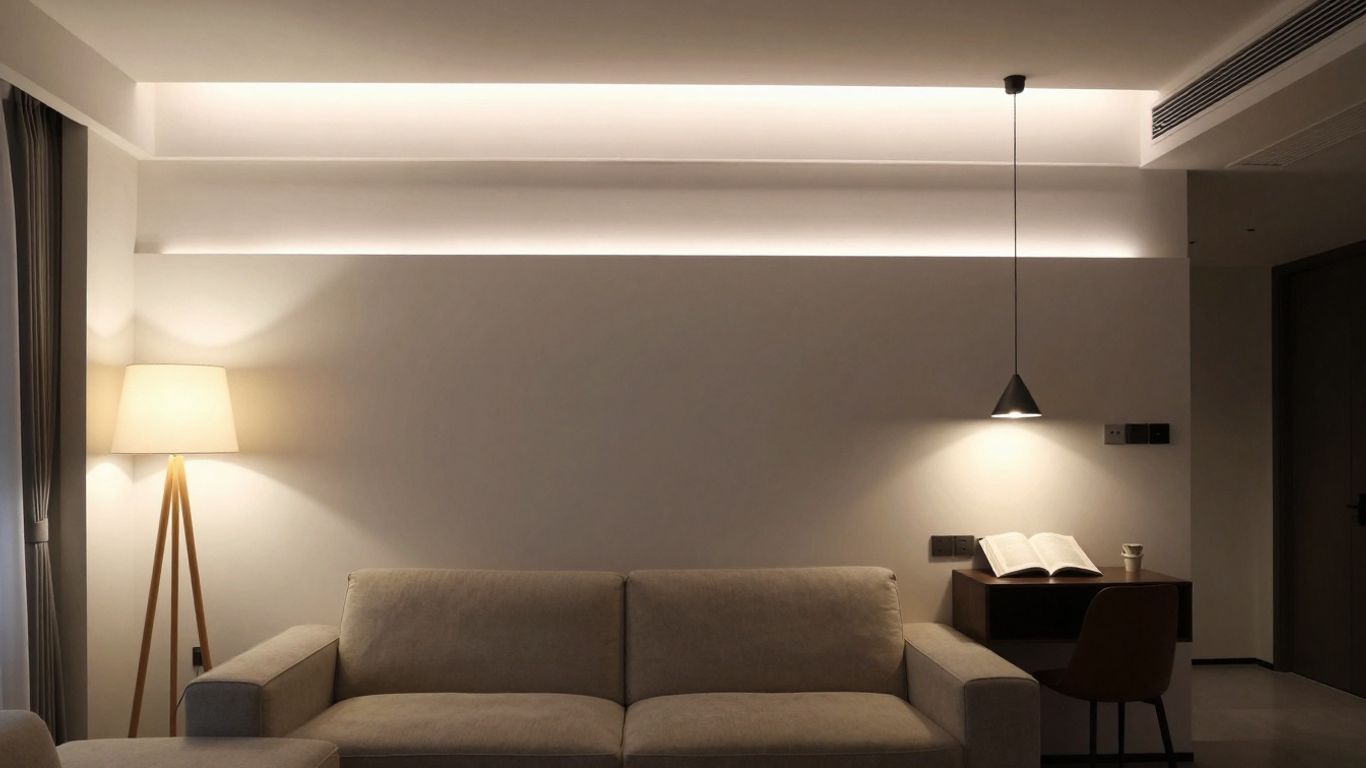
Static lighting can feel a bit, well, static, can't it? That's where dimmers and smart controls come in. They're not just about turning lights on and off anymore; they're about making your lighting system feel alive and responsive. Think about it: a room that can shift its mood from bright and energetic for a morning catch-up to a soft, cosy glow for an evening film without you lifting a finger. Dimmers allow for smooth transitions, so the light doesn't just jump from bright to dark, but fades gently, which is much easier on the eyes. This adaptability means a single space can serve multiple purposes throughout the day, feeling perfectly lit for whatever you're doing.
Scene-Based Controls For Seamless Transitions
This is where things get really interesting. Scene-based controls let you pre-programme specific lighting setups. You could have a 'Dinner Party' scene that dims the main lights slightly and brings up accent lighting on the table, or a 'Reading Nook' scene that focuses a brighter, cooler light on your favourite armchair. These scenes can be activated with a single button press or even a voice command. It's like having a lighting director for your home, orchestrating the perfect atmosphere for any occasion. These systems can often link together different types of lights – ambient, task, and accent – so they all work in harmony, rather than competing with each other. It makes the whole lighting scheme feel much more cohesive and intentional.
Energy Savings Through Intuitive Systems
Beyond the mood-setting capabilities, smart controls and dimmers are brilliant for saving energy. You're less likely to leave lights on unnecessarily when you can easily dim them down or turn them off remotely. Many systems also incorporate motion or occupancy sensors. These can automatically dim or switch off lights in rooms that are empty, which is a real game-changer for energy consumption. Plus, by dimming lights, you're not only using less electricity but also extending the lifespan of your bulbs, whether they're standard LED bulbs or more specialised range light bulbs. It’s a win-win: good for your wallet and good for the planet.
Here's a quick look at how different control types can impact your lighting:
| Control Type | Primary Benefit | Energy Saving Potential | Ease of Use |
|---|---|---|---|
| Manual Dimmers | Smooth brightness adjustment | Moderate | High |
| Scene Controllers | Pre-set lighting moods | Moderate to High | High |
| Motion Sensors | Automatic on/off based on presence | High | Moderate |
| Smart Home Integration (App/Voice) | Remote access & complex automation | High | Varies |
Integrating these control systems transforms lighting from a passive element into an active participant in your home's comfort and efficiency. It allows for a level of customisation that was previously unimaginable, making your interior lighting truly work for you.
Embracing Sustainability In Interior Lighting Design
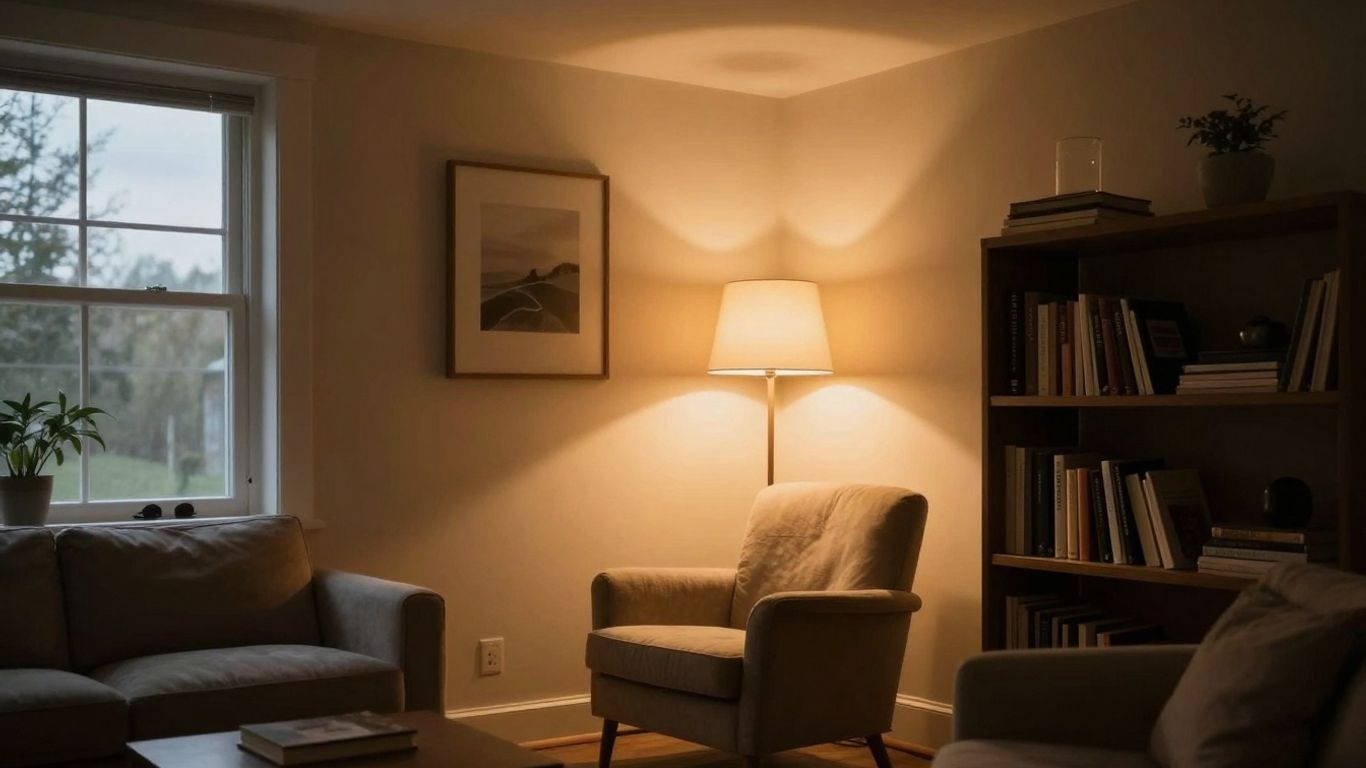
Making our homes and workplaces more eco-friendly is a big deal these days, and lighting plays a huge part in that. It's not just about making things look nice; it's about being smart with energy.
Energy-Efficient Solutions For Reduced Impact
When we talk about sustainability in lighting, the first thing that comes to mind is using less electricity. This means looking at the types of bulbs we use. For ages, we were stuck with incandescent bulbs that guzzled power and got really hot. Then came halogens, a bit better, but still not great. Now, we've got LEDs, and they're a game-changer. They use a fraction of the energy and last way, way longer. Think about replacing those old bulbs with LED bulbs; it's a simple step that makes a big difference over time. You can find a whole range of light bulbs now, all designed to be more efficient. Even when a bulb eventually needs replacement, choosing an LED means you're buying a product that's built to last and consume less.
Smart Lighting Systems For Optimised Consumption
Beyond just the bulbs themselves, smart lighting systems are really starting to shine. These systems let you control your lights in ways that save energy without you even having to think about it. You can set timers so lights aren't on when they don't need to be, or use motion sensors that switch lights off automatically when a room is empty. A smart bulb can be programmed to dim at certain times or change colour temperature to suit the mood, all while using less power than a standard bulb. It's about making lighting work for you, not the other way around.
Long-Term Benefits Of Eco-Conscious Choices
Choosing sustainable lighting isn't just good for the planet; it's good for your wallet too. Those energy savings add up on your electricity bills. Plus, because energy-efficient bulbs like LEDs last so much longer, you're not constantly buying replacements. It means less waste going to landfill as well. It’s a win-win situation, really. Making these choices now means a more comfortable home and a healthier environment for the future.
Here are a few ways to make your lighting more sustainable:
- Switch to LED bulbs: They use up to 80% less energy than traditional bulbs and last much longer.
- Install dimmers: Being able to lower the light level when full brightness isn't needed saves energy.
- Use smart controls: Timers and motion sensors ensure lights are only on when necessary.
- Consider natural light: Maximise daylight where possible to reduce the need for artificial lighting during the day.
Making informed choices about our lighting can have a significant positive impact. It's about using technology and thoughtful design to reduce our environmental footprint while still creating beautiful and functional spaces. Every little bit helps, and lighting is an area where we can make some really noticeable changes.
Making your home look good while being kind to the planet is easier than you think! Thinking about how you light up your rooms can make a big difference. Using eco-friendly lights not only helps the environment but can also save you money. Ready to make your home shine sustainably? Visit our website to explore our range of green lighting options.
Wrapping Up Your Lighting Journey
So, that’s a look at how to get your lighting just right. It’s not just about sticking a bulb in a socket, is it? Thinking about the different kinds of light – the general glow, the focused beams for reading or cooking, and those little touches that make things pop – really makes a difference. It’s about making a space feel good, whether you’re trying to relax or get some work done. Don’t be afraid to play around with it; dimmers are your friend, and sometimes a well-placed lamp can change everything. It’s all about creating a mood that works for you and your home. Give it a go, and see how much better your rooms can feel.
Frequently Asked Questions
What's the main idea behind ambient lighting?
Ambient lighting is like the main mood-setter for a room. It's the general light that fills up the space, making it feel comfortable and welcoming. Think of it as the base layer of light that makes everything else possible.
Why is task lighting important?
Task lighting is all about making specific jobs easier. Whether you're reading, cooking, or working at a desk, task lighting gives you the bright, focused light you need to see clearly and avoid straining your eyes.
How can accent lighting make a room more interesting?
Accent lighting is used to draw attention to specific things, like a piece of art, a cool plant, or an interesting architectural feature. It creates highlights and shadows, adding depth and drama to your room.
Does the colour of light matter?
Yes, it really does! Warm light, like from a cosy lamp, makes a room feel snug and relaxing. Cooler light, which is more like daylight, can make a space feel more alert and modern. It's all about matching the light colour to the room's purpose.
What are dimmers and smart controls for?
Dimmers let you change how bright the lights are, so you can go from bright for working to dim for relaxing. Smart controls are even cleverer – they let you control lights with your phone or set up different lighting 'scenes' for different times of day or activities.
How can I make my lighting more eco-friendly?
Use energy-saving bulbs like LEDs, which use much less electricity. Smart lighting systems can also help by automatically turning lights off when you're not in the room or dimming them when full brightness isn't needed.

